
Experience in South Africa
Castle of Good Hope
About Castle of Good Hope
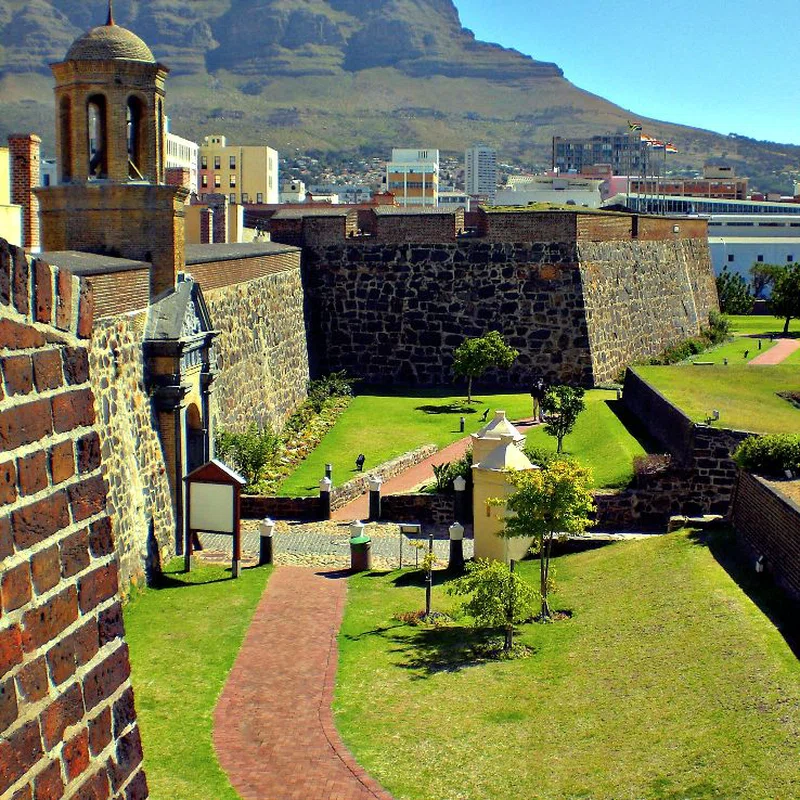
The Castle of Good Hope, located in Cape Town, South Africa, is a prominent 17th-century pentagonal bastion fort, recognized as the oldest surviving colonial building in the country. Constructed by the Dutch East India Company (VOC) between 1666 and 1679, it replaced an earlier fort established by Jan van Riebeeck in 1652. Originally situated on the coastline of Table Bay, land reclamation has since moved it inland, though it remains surrounded by a canal. Its distinctive pentagonal design features five bastions named Leerdam, Buuren, Katzenellenbogen, Nassau, and Oranje. The Castle served as a crucial replenishment station for ships traversing the Spice Route between the Netherlands and the Dutch East Indies.
Throughout its history, the Castle has played various roles. It housed a church, bakery, workshops, living quarters, and shops. During the Second Boer War (1899–1902), a portion of the castle was utilized as a prison, with its former cells still present today. In 1936, it was declared a national monument, and following extensive restorations in the 1980s, it is now considered the best-preserved example of a Dutch East India Company fort globally. The Castle also served as the local headquarters for the South African Army in the Western Cape and, prior to 2003, its unique shape was incorporated into South African Defence Force flags and rank insignia.
Today, the Castle of Good Hope is a vibrant heritage site open to visitors. Daily guided tours are offered, and a ceremonial "Key Ceremony" and signal cannon firing take place on weekdays, replicating historical drills. Inside, visitors can explore the Castle Military Museum and the William Fehr Collection, which showcases fine examples of paintings, antique Cape furniture, and decorative arts relevant to early colonial South Africa. The Cape Heritage Museum, curated by Mr. Igshaan Higgins, also resides within the Castle, providing an inclusive narrative of South Africa's diverse history. Beyond its museum functions, the Castle serves as a venue for private events, cultural gatherings, music festivals, and community dialogues. It also offers dining options at De Goewerneur Restaurant and Waterblommetjie.
Things to see
Close by


Where to stay
Where to eat


Things to do
Castle of Good Hope
Mozambique Tours

Day Safari
Cape Town City Tour

11 to 15 Day Tours
Cape Town Safari Tours: 2 to 5 Day Options
Weather through the year
Average temperatures and rainfall by month
Station: 339s184e · 10.6 km away · -9999m