
Experience in Tanzania
Christ Church Anglican Cathedral (Former Slave Market in Zanzibar)
About Christ Church Anglican Cathedral (Former Slave Market in Zanzibar)
The Former Slave Market in Zanzibar, now officially known as the Christ Church Anglican Cathedral (Former Slave Market in Zanzibar), is a profound site of memory located in Stone Town, Zanzibar City, Tanzania. This location was once the largest slave market in Eastern Africa, where an estimated 600,000 people were sold as merchandise between 1830 and 1873. The market was a central hub for the East African slave trade, with captives brought from vast areas of Central and East Africa, including modern-day Uganda, Kenya, Burundi, Rwanda, Nigeria, Zambia, Tanzania, and Mozambique. Slaves were transported in horrific conditions, often in overcrowded dhows, with many dying during the journey. Upon arrival, they were held in cramped, suffocating underground chambers before being auctioned. These chambers, some of which can still be visited today, were designed to hold dozens of people with minimal air, food, and water, and rudimentary toilet channels connected to the ocean. A particularly brutal practice involved whipping slaves tied to a tree to demonstrate their strength; those who did not cry fetched a higher price.
The slave market was officially closed in 1873 due to pressure from the British government and abolitionist efforts led by figures like Dr. David Livingstone. Following its abolition, English Missionaries purchased the site, and the Anglican Christ Church Cathedral was built there, inaugurated in 1879. The cathedral's altar is intentionally placed over the exact spot where the whipping post once stood, marked by a white marble circle surrounded by red stones symbolizing the blood shed by the enslaved. Bishop Edward Steere, a key figure in the cathedral's construction and an abolitionist, is buried behind the altar. Inside, a wooden cross made from the tree under which David Livingstone's heart was buried in Zambia is displayed.
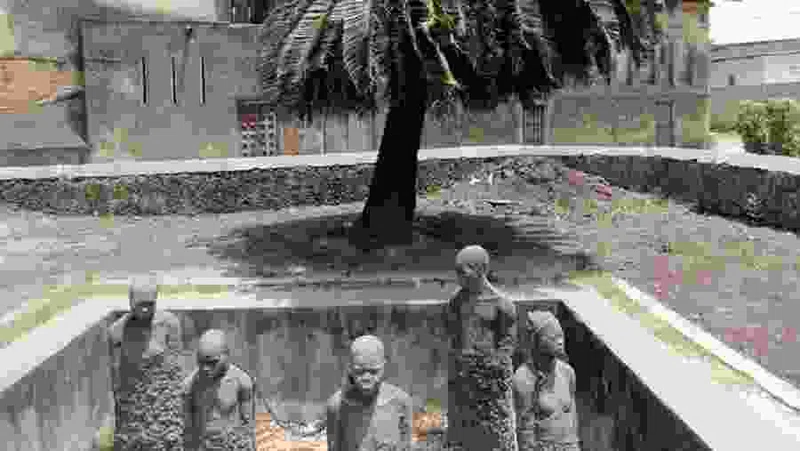
Outside the cathedral, in the garden, stands the “Memory for the Slaves” monument, created by Swedish artist Clara Sornas in 1998. This powerful sculpture features five stone figures, men and women, young and old, enchained by their necks in a pit, bearing original chains. Near the church, the Exhibition of the Slave Market of Eastern Africa, inaugurated in 2006, provides further historical information, pictures, and photographs detailing the slave transportation, sale, abolition, and even modern forms of slavery. The entire Stone Town, including this site, was registered in the UNESCO World Heritage List in 2000, recognizing its extraordinary integration of diverse cultures and its significance as a place of memory.
Things to see
Close by

Where to stay

Where to eat



Things to do
Christ Church Anglican Cathedral (Former Slave Market in Zanzibar)

Christ Church
Kidichi Persian Baths
The Old Fort

Livingstone's House
Stone Town City Tour
Weather through the year
Average temperatures and rainfall by month
Station: 58s388e · 28 km away · 89m