
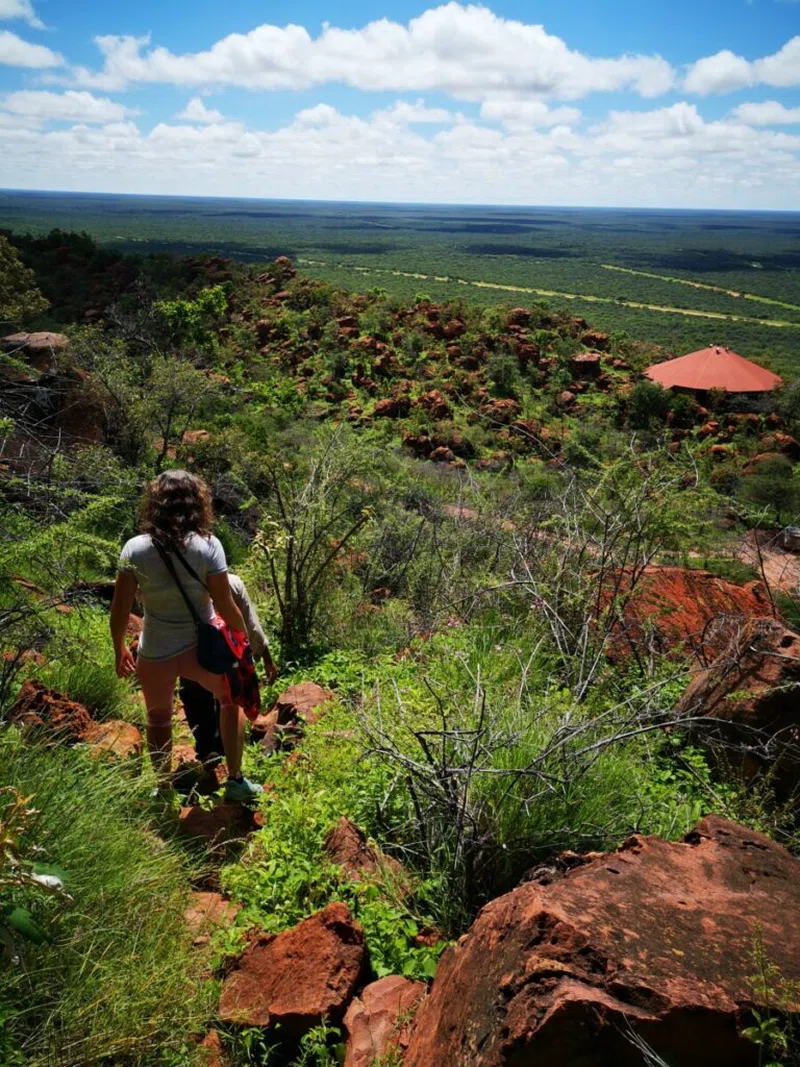
Waterberg Plateau Park
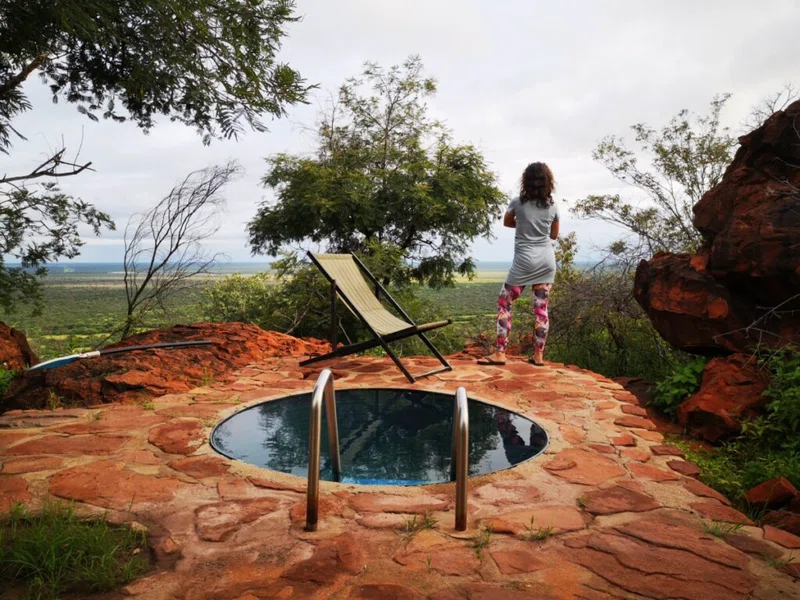
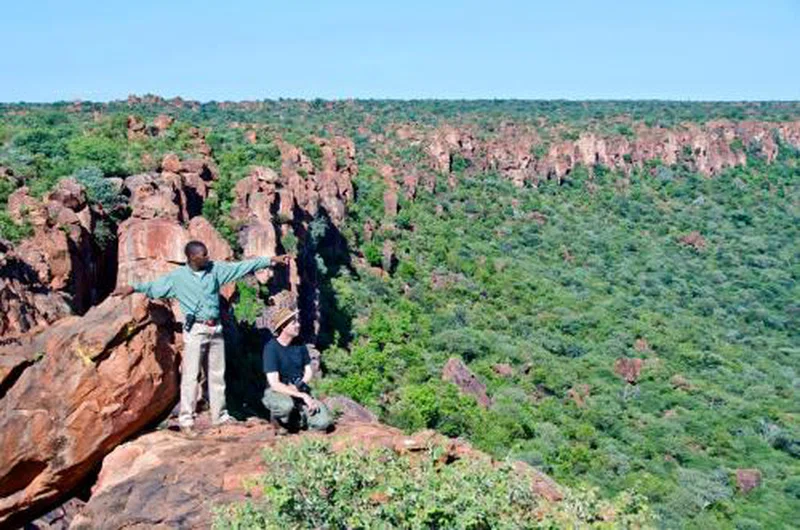
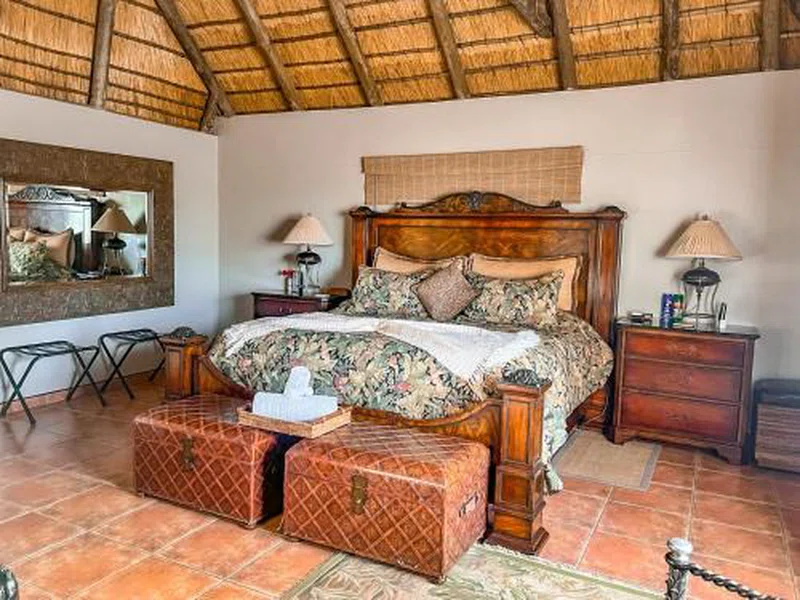
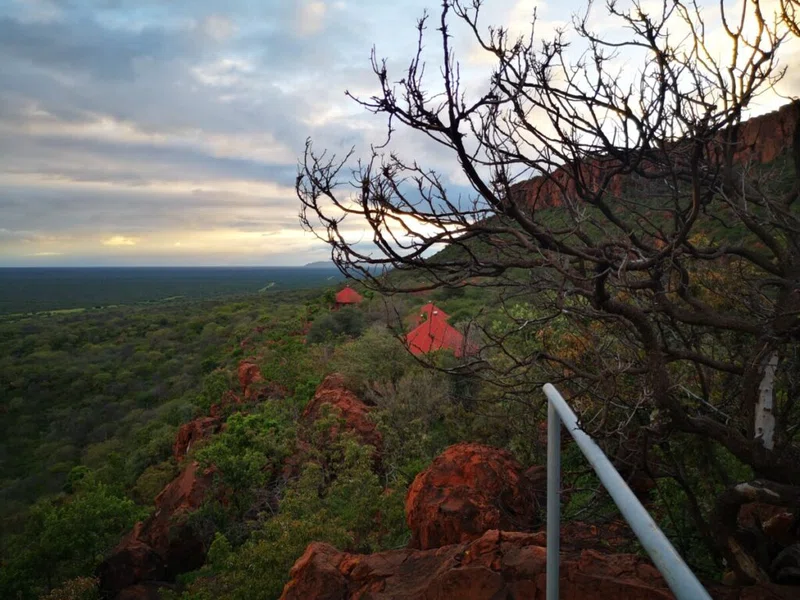
Waterberg Plateau Park is a national park located in central Namibia, approximately 68 kilometers east of Otjiwarongo. Proclaimed a nature reserve in 1972, the park spans 405 square kilometers (41,000 hectares) and is centered around the prominent Waterberg Plateau. This table mountain rises dramatically about 200 meters above the surrounding Kalahari plains, stretching approximately 49 to 50 kilometers in length and 8 to 16 kilometers in width. The plateau is characterized by towering sandstone cliffs, porous rock formations, and a unique microclimate that supports dense, broad-leafed deciduous vegetation, contrasting sharply with the thornbush savanna below. Geologically significant, the area features rock strata over 850 million years old and dinosaur tracks dating back 200 million years. Permanent springs at the foot of the plateau contribute to its lush environment.The park serves as a vital sanctuary for rare and endangered game species, playing a crucial role in breeding programs for restocking other Namibian conservation areas. Its diverse ecosystem supports over 200 bird species, including Namibia's only Cape vulture colony. Key wildlife inhabitants include black and white rhinoceros, buffalo, roan and sable antelope, eland, tsessebe, giraffe, kudu, impala, gemsbok, klipspringer, steenbok, leopard, cheetah, brown hyena, caracal, black-backed jackal, Damara dik-dik, and lesser bush babies. Visitors can engage in guided drives on the plateau, explore a 48-kilometer unguided hiking trail, or participate in guided wilderness trails. The Bernabé de la Bat Rest Camp, nestled at the base of the plateau, offers accommodation, a restaurant, shop, and swimming pool.Waterberg Plateau Park holds profound historical and cultural significance. It was the site of the pivotal Battle of Waterberg in 1904, where Herero warriors suffered a devastating defeat against German colonial forces, leading to immense loss of life and a forced retreat across the Omaheke Region. Graves of German soldiers can still be found near the rest camp. The area's earliest human inhabitants were the San people, who left behind ancient rock engravings. A Rhenish mission station was established here in 1873, further marking its historical importance.
Quick Info
Own this place?
Claim it to manage photos, respond to visitors, and promote it to travelers.
Claim this listing →Safari Tours
6 tours departing from this area
 luxury14 days
luxury
14-Day Namibian Culture and Wildlife Safari
$7,095
 Sawoto World Safaris and Tours Pty Ltd trading as Sawoto World Safaris
 luxury7 days
luxury
7-Day Wildlife Game Trails in Namibia (Camping)
$2,475
Sawoto World Safaris and Tours Pty Ltd trading as Sawoto World Safaris luxury21 days
luxury
21-Day Comprehensive Namibia Safari Tour
$8,388
Sawoto World Safaris and Tours Pty Ltd trading as Sawoto World Safaris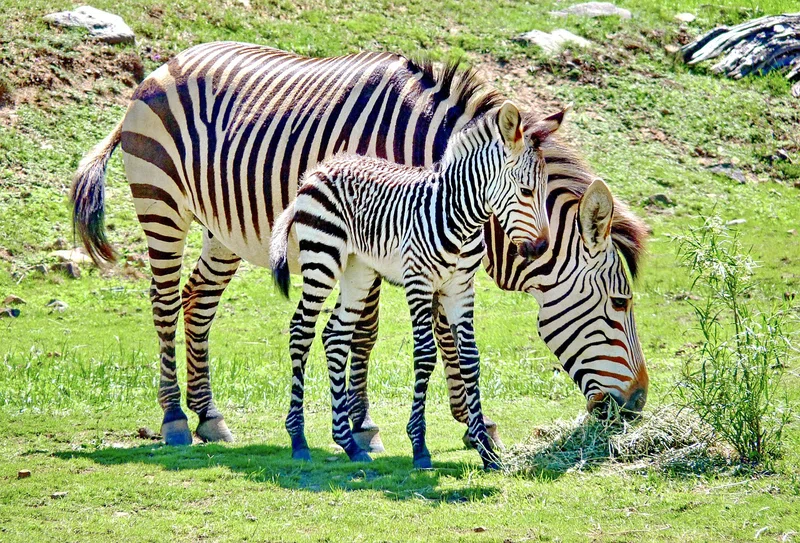 luxury9 days
 luxury15 days
 luxury10 days
luxury
10-Day Ultimate Namibian Northeast Adventure
$6,160
Premeleo Expedition Africa Cc trading as PEA Tours and Safaris

Weather & Rainfall Patterns
Station: 205s169e · 27.6 km away · 1603m