
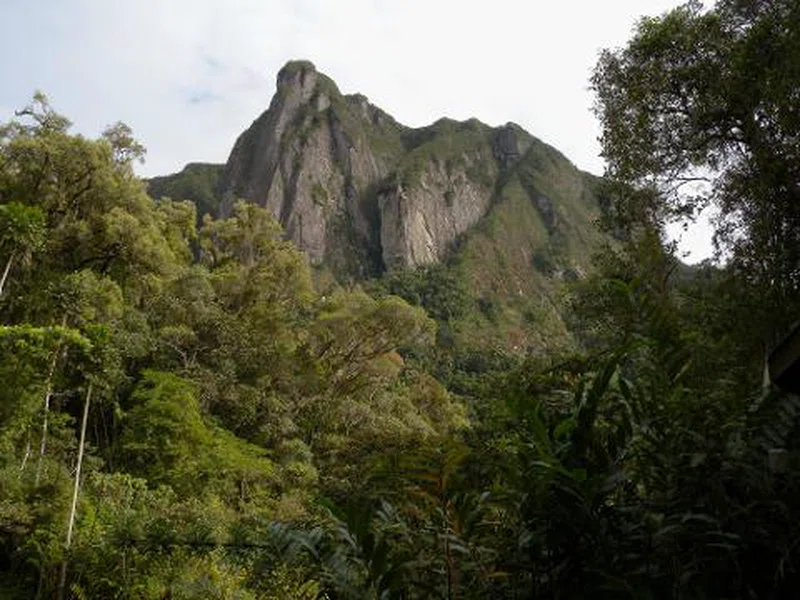
Marojejy National Park
Marojejy National Park, located in the SAVA region of northeastern Madagascar, is a UNESCO World Heritage Site renowned for its exceptional biodiversity and dramatic mountain landscapes. Covering approximately 55,500 hectares, the park encompasses the Marojejy Massif, a rugged granite mountain chain that rises steeply from lowland rainforests to a peak elevation of 2,132 meters (6,995 feet). This significant elevation gradient creates a mosaic of distinct habitats, including dense lowland rainforests, moist montane rainforests, cloud forests, and unique high-altitude montane scrub, which is one of the last undisturbed examples in Madagascar. The park is characterized by steep ridges, deep valleys, numerous rivers, and cascading waterfalls, such as the Cascade de Humbert.The park is a global biodiversity hotspot, home to a remarkable array of endemic flora and fauna. It hosts at least 118 bird species, 148 reptile and amphibian species, and 11 lemur species. Marojejy is particularly famous as the last remaining habitat for the critically endangered silky sifaka (Propithecus candidus), often called the "angel of the forest" due to its striking white fur. Other notable wildlife includes the helmet vanga (Euryceros prevostii), various chameleons like Brookesia karchei and Uroplatus leaf-tailed geckos, and several frog species such as Mantella laevigata. The diverse flora includes over 2,000 species of flowering plants, 35 palm species (seven endemic to Marojejy), and more than 275 fern species (seven endemic to Marojejy), alongside rare rosewood and palisandre trees.Marojejy National Park offers challenging yet rewarding trekking experiences. A single main trail leads from the visitor center in Manantenina to the summit, with three rustic camps along the way: Camp Mantella (450m), Camp Marojejia (775m), and Camp Simpona (1,250m). Treks vary in length and difficulty, from shorter hikes to Camp Mantella to multi-day expeditions to the summit, providing opportunities for immersive wildlife viewing, birdwatching, and photography amidst stunning natural scenery. Guides and porters are mandatory for all treks, ensuring a safe and informative exploration of this pristine wilderness. The best time to visit is typically from October to mid-December, when rainfall is less frequent and wildlife is more active.
Quick Info
Own this place?
Claim it to manage photos, respond to visitors, and promote it to travelers.
Claim this listing →Safari Tours
2 tours departing from this area




Weather & Rainfall Patterns
Station: 145s494e · 26.6 km away · 1418m