
Amber Mountain National Park
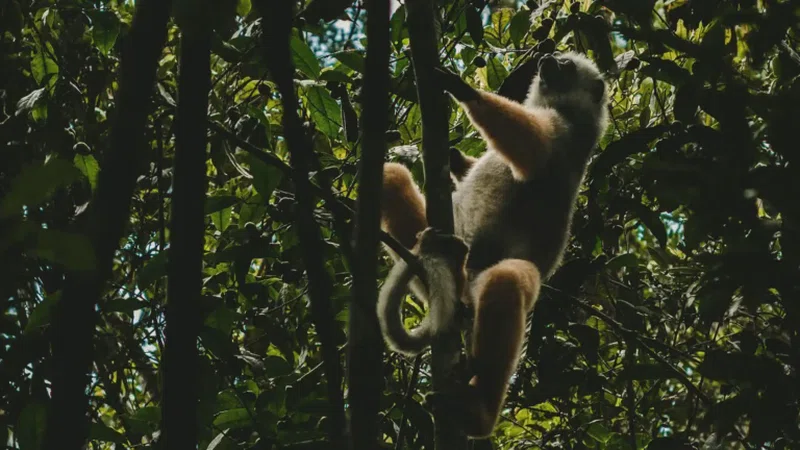
Amber Mountain National Park, known locally as Montagne d'Ambre, is a significant protected area located in the Diana Region of northern Madagascar. Situated approximately 27 to 40 kilometers southwest of Antsiranana (Diego Suarez) and about 1000 kilometers north of the capital Antananarivo, the park encompasses an area of 18,200 hectares (182 km²). Established in 1958, it holds the distinction of being one of Madagascar's first and oldest national parks. The park is centered around Mount Ambohitra, an isolated volcanic massif composed primarily of basaltic rock, which rises dramatically from the surrounding drier landscape. Its high mountainous topography captures substantial rainfall, averaging 350-400 cm annually, making it a lush rainforest oasis and a crucial water catchment area for the town of Antsiranana. The park's name is believed to derive either from the amber resin found in some of its trees, used for medicinal purposes, or from the amber-colored flowers that cover the mountain.The park's diverse terrain features montane rainforest, mid-altitude rainforest, and dry deciduous forest, with elevations ranging from 800 to 1475 meters. Key natural attractions include spectacular waterfalls such as Cascade d'Antomboka, Cascade Sacrée, and Grande Cascade, as well as several serene crater lakes like Lac de la Coupe Verte and Lac Verte. A well-maintained network of trails offers visitors various hiking opportunities, from short, easy walks to more challenging treks, including a 12-hour ascent to the mountain's summit. Guided day and nocturnal visits are popular, allowing for observation of the park's rich biodiversity. The nearby village of Joffreville (Ambohitra), a former French officers' retreat, serves as the primary entry point and a base for visitors, though no accommodation exists within the park itself.Amber Mountain National Park is renowned for its exceptional biodiversity, making it one of Madagascar's most biologically diverse regions. It is a haven for numerous endemic species, boasting 75 bird species (35 endemic), 25 mammal species (including 8 lemur species and 6 carnivores), 59-60 reptile species (including 11 chameleons), and 25-35 amphibian species. Notable wildlife includes the crowned lemur, Sanford's brown lemur, and the northern fork-striped lemur, which are often easily spotted. The park is particularly famous for its chameleons, ranging from the tiny Montagne d'Ambre leaf chameleon (Brookesia tuberculata) to the larger Amber Mountain chameleon (Calumma ambreense), as well as various species of perfectly camouflaged leaf-tailed geckos. Other inhabitants include the ring-tailed mongoose, fossa, Madagascar fish eagle, and the Amber Mountain rock thrush.
Quick Info
Own this place?
Claim it to manage photos, respond to visitors, and promote it to travelers.
Claim this listing →Safari Tours
10 tours departing from this area
luxury
9-Day Islands, Beaches and Wilderness
$3,194
luxury
10-Day Nature & Heavenly Beaches of Northern Madagascar
$2,958
 Sunset Holidays Madagascar trading as Sunset Holidays Madagascar



Weather & Rainfall Patterns
Station: 123s488e · 20.8 km away · -9999m