
City in South Africa
Johannesburg
About Johannesburg
Johannesburg, South Africa's largest city, emerged rapidly in 1886 following the discovery of gold on the Witwatersrand. This sparked one of the world's most significant gold rushes, quickly transforming a barren landscape into a thriving metropolis. Often called "Egoli," meaning City of Gold, it became the economic heart of South Africa and a global financial hub. The city is characterized by its contrasts, where modern architecture stands alongside historic landmarks, and it is also recognized as one of the world's greenest cities, home to over ten million trees.
The city played a crucial role in shaping South Africa's history, particularly during the anti-apartheid movement. Visitors can explore this past at the Apartheid Museum, which details the country's journey from segregation to democracy. Constitution Hill, a former prison complex that now houses South Africa's Constitutional Court, offers insights into the nation's legal transformation and human rights. The township of Soweto, a symbol of resistance, was home to Nobel Peace Prize winners Nelson Mandela and Desmond Tutu, and Mandela's former residence is now a museum. For a glimpse into the city's gold mining origins, Gold Reef City provides a heritage tour, including a descent into an old mine shaft.
Beyond its historical depth, Johannesburg is a dynamic urban center with diverse neighborhoods. Areas like Maboneng serve as cultural hubs. Other attractions include Nelson Mandela Square and the iconic Orlando Towers in Soweto. The city is also a major transportation gateway, with O.R. Tambo International Airport serving as Africa's busiest travel hub.
Things to see
Sights and landmarks in and around Johannesburg


Where to stay

Where to eat




Things to do
South Africa Safari

1-Day Pretoria, Soweto and Apartheid Museum Tour
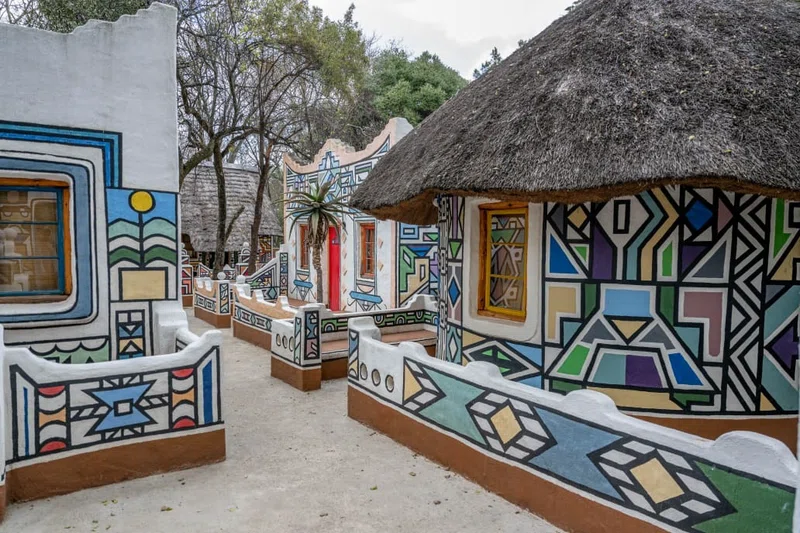
Lesedi Cultural Village
1-Day Cradle of Humankind Tour
Weather through the year
Average temperatures and rainfall by month
Station: 258s278e · 23.3 km away · 1140m