
13 DAYS BUDGET SAFARI
About 13 DAYS BUDGET SAFARI
This is budget safari which starts from Nairobi and ends in Nairobi. You will be able to visit Masai Mara Safari from Nairobi then proceed to Lake Nakuru National Park and then across the equator to Samburu National Park. You will stay in budget tented camps or Guest houses in Masai Mara Lake Nakuru and Samburu National Park. (Maasai Mara - Naivasha - Nakuru - Samburu - Mount Kenya - Amboseli - Tsavo West - Tsavo East - Nairobi or Mombasa).The main purpose of a wildlife safari is to see Kenya's wild animals in their natural state. Many people are surprised when they see birds perched within the reach of predators, or gazelles grazing near big cats. The truth is that predators generally only kill to eat, and for the rest of the time both predators and prey live together in harmony!
- It can be a long, hot day on a Kenya wildlife safari, so wear cool, comfortable clothing and a sunhat.
Remember to bring your camera, binoculars, sunglasses and water to drink..
-You'll be collected from the airport (or hotel).
-Accommodation before the tour departs can be arranged for an extra cost
Day 1: Nairobi / Masai mara
On arrival at the Jomo Kenyatta International Airport, or if you are staying in a Nairobi City Hotel, our tour manager will meet you and brief you on your safari, and thereafter you will depart Nairobi for Masai Mara Game Reserve, picnic lunch en-route. On arrival proceed to the camp. After a short rest proceed for a game drive in search of black maned lions, elephants, leopards, cheetah, buffaloes and other plains game. Maasai Mara, now The New 7th wonder of the world and 4th preferred tourist destination in the world is a home to wildlife in such abundance and variety that it is difficult to imagine. The most spectacular event of the natural world takes place here; The annual migration of millions of wildebeest and zebra from the Serengeti (Tanzania) in search of water and pasture while being followed on their heels by the predators of the savanna; lion, cheetah, wild dog, jackal, hyena and vulture. Return to the camp for dinner and overnight.
All meals and Overnight at Manyatta tented camp / Rhino tourist camp /Enchoro Wildlife camp / similar budget camp.
Main Destination: Masai Mara National Reserve
Accommodation: Manyatta Tented camp• Budget tented camp located just outside Masai Mara
all Meals & Drinking water (Other drinks not included)
Day 2 /3: Masai mara
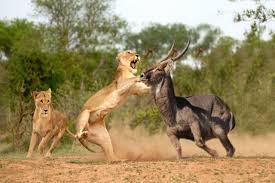
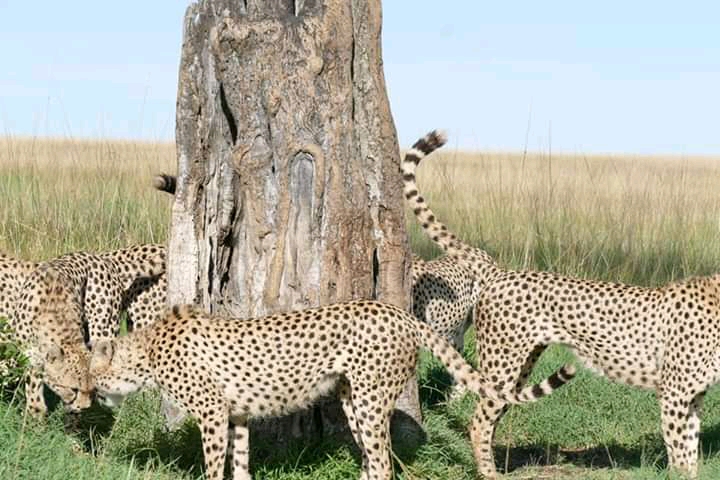
Early breakfast followed by a full day of game drive within the reserve. Masai Mara is renowned for its high animal concentration and abundance. Black-maned lions, elephants and buffalo can be seen (3 out of the big 5) though luck is essential for spotting leopard and rhino, which make the other two. The reserve is essentially the northern extension of Tanzania's Serengeti National Park and is home to numerous plains game including wildebeest, common zebra and the Maasai giraffe as well as antelopes like Thompson's gazelle, hartebeest, impala and dik dik among others. You will have a break for your picnic lunch at the hippo pool where hippos are in view and with luck, crocodiles. Masai Mara is one of the best-known reserves in the whole of Africa, and is globally renowned for its exceptional wildlife. Despite comprising only 0.01% of Africa’s total landmass, more than 40% of Africa’s larger mammals can be found here. Across the vast plains of the Mara visitors are able to witness lions, cheetahs, leopards, elephants, and an infinite variety of other species in their natural habitats. This area is known for its predator population, particularly lions, hyenas and cheetahs. Cheetahs are severely endangered, and it is quite magnificent to see them take down kills at 110km/h on the Masai plains.Return to the camp for dinner and overnight.Main Destination: Masai Mara National Reserve
Accommodation: Manyatta tented camp
-Budget tented camp located outside Masai Mara
Meals & Drinks:•
All meals included•
Drinking water (Other drinks not included)
Day 4: Masai mara / Lake Naivasha
Early Morning game viewing in the Mara with an option nature walk or visit to a nearby Maasai village in between the meal breaks. (Maasai village visit available at extra cost). You can opt to carry out your game viewing activity on an adventurous and unforgettable balloon safari over the spectacular Mara at an extra cost. Maasai Mara, now The New 7th wonder of the world and 4th preferred tourist destination in the world is a home to wildlife in such abundance and variety that it is difficult to imagine. The most spectacular event of the natural world takes place here; The annual migration of millions of wildebeest and zebra from the Serengeti (Tanzania) in search of water and pasture while being followed on their heels by the predators of the savanna; lion, cheetah, wild dog, jackal, hyena and vulture. Depart for Lake Naivasha to arrive for lunch. Afternoon Proceed on your adventure to various attractions and optional activities which includes, a visit to Hell's Gate National Park is characterized by diverse topography and geological scenery The park is home to a profusion of plains game and bird life. Walking is permitted, making it ideal for hiking, biking, and rock climbing. Much of the lake is surrounded by forests of the yellow barked Acacia Xanthophlea, known as the yellow fever tree. These forests abound with bird life. Giraffes wander among the acacia, Buffalo wallow in the swamps and Colobus monkeys call from the treetops while the Lakes large hippo population sleeps the day out in the shallows.Optional excursions in Lake Naivasha includes:1 hour boat ride : USD 40 per person2 hours walking safari on Crescent Island Sanctuary : USD 50 per personWalking / biking safari at Hells gate national park : USD 60 per person.Main Destination: Lake Naivasha
Accommodation: Camp Carnellys• Budget tented camp located in or near Lake Naivasha
Meals & Drinks:• All meals included•
Drinking water (Other drinks not included)
Day 5: Lake Naivasha / Lake Nakuru
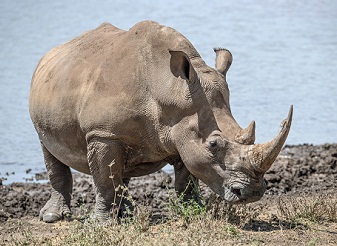
After breakfast, depart for Lake Nakuru national park the home of millions of flamingos and the home of the white rhino and about 350 different species of birds. Lake Nakuru is also known as the "Ornithological Paradise" because of the hundreds of thousands of birds that are found here. Lake Nakuru is a soda lake on the floor of the Rift valley. It is famous due to its being a home to about 1.5 million flamingo's and the over 450 species of birds found here. The sight of the millions of flamingos is quite spectacular. From a distance the lake appears ringed in pink. The Lake has also earned a reputation as an important haven for endangered species - particularly the Rothschild Giraffe and the black and white rhino. It is a home to Lions, waterbucks, buffalos, baboons and pelicans. Dinner and Overnight at the camp or Hotel.Main Destination: Lake Nakuru National Park
Accommodation: Lanet Matfam Resort
•Budget hotel located just outside Lake Nakuru
Meals & Drinks:• All meals included•
Drinking water (Other drinks not included)
Day 6: Lake Nakuru / samburu
After breakfast, depart for Samburu via the Thompson falls. Drive further north on the south bank of the Uaso Nyiro River, downriver from Archer’s Post. North of the Equator some of the animals and vegetation are a little different from those commonly found south. However unfamiliar animals are the Gravy’s zebra, the reticulated giraffe and the Somali ostrich. There is also the long neck gerenuk, Beisa Oryx, and hunting dog. Crocodiles in the river can be seen from the lodge/tented camp. The vegetation is usually dry grass with a few swampy patches. There is some forest cover along the Uaso Nyiro River and an abundance of doum palms. Return back to the camp for dinner and overnight. All Meals and Overnight at Umoja samburu camp / similar.Main Destination: Samburu National Reserve
Accommodation: Budget camping• Bordering Samburu without fences
Meals & Drinks:• All meals included•
Drinking water (Other drinks not included)
Day 7: Samburu
After breakfast, depart for an early morning game drive. Return to a camp for lunch and later afternoon game drive till dusk. Samburu National Reserve is a wildlife haven. Here you will spot Africa's big cats - lions, cheetahs and the elusive leopard. Some animals are unique to this northern Kenya Park: Grevy's zebra, reticulated giraffe, kudu and gerenuk. The Ewaso Nyiro River, the boundary with the neighboring Buffalo Springs National Reserve, is where the elephants, buffalo and other animal species gather for a drink. You will find the scenic semiarid landscape quite dramatic. The reserve is located within the lands of the colorful semi-nomadic Samburu tribesmen.The Uaso Nyiro River cuts through this reserve, drawing a big population of Kenya animals to the park. The river bustles with activity from its huge population of Nile crocodile. The reserve's topography is mainly open savannah (grassland) with clusters of acacia trees, forest, thorn trees and grassland vegetation. The elusive Kenya leopard is often known to visit the park, especially in the evenings. Samburu National Reserve was one of the two areas in which conservationists George and Joy Adamson raised Elsa the Lioness. Their story was made famous by the bestselling book and award-winning movie "Born Free".Dinner and overnight at a camp.Main Destination: Samburu National Reserve
Accommodation: Budget camping• Bordering Samburu without fences
Meals & Drinks:• All meals included•
Drinking water (Other drinks not included)
Day 8: Samburu / Aberdares national park
After breakfast, drive to the lush foothills of snow capped Mount Kenya - Africa's second highest mountain, to Aberdares national park to arrive for lunch and afternoon game drive. The Aberdares are an isolated volcanic range that forms the eastern wall of the rift valley, running about 100 Km north south between Nairobi and Thompsons Falls. This beautifully scenic region is much cooler than the savanna's and offers a completely different perspective on the country. The national park lies mainly above the tree line. The scenery is spectacular with its mountainous terrain covered in thick tropical forests swathed in mist.Zaina falls(Aberdares national park-Nyeri county) one of the best Kenyan hidden tourist attraction through "Kamuyu" shopping center. The hike takes 3 hrs up and down to the falls hence ideal for beginners/novice hikers. This is only discovered after one takes the initiative to trek down the steep slope which would qualify to be one of the best natural gyms for those struggling with excess weight. The slope stands at over 60% and by mere climbing up and down the hill, one is sure of losing at least a kilo for every two trips they make on the trail. Trout fishing in the ice-cold Guru Karuru and Chania Rivers is another popular activity. You can also take time to admire Lesatima and Kinangop peaks or walk through the moorland and visit the magnificent waterfalls.Return to the camp or Hotel for dinner and Overnight.Main Destination: Aberdare National Park
Accommodation: Budget camping• Just outside Aberdare
Meals & Drinks:
•All meals included
-Drinking water (Other drinks not included)
Day 9: Aberdares / Amboseli national park
After breakfast, drive south via the biggest open-air market in East and Central Africa (Karatina). Proceed to Nairobi arriving in time for lunch in one of the restaurants. Continue to Amboseli arriving in the camp late in the afternoon. An evening game viewing drive will be done if time allows.Despite its small size (392 sq km), this fragile ecosystem supports a wide range of mammals (well over 50 of the larger species) and birds (over 400 species).The waters from Mt. Kilimanjaro drain down the mountain under lava flows and surface in Amboseli, creating a green belt of swampland amidst dusty plains.Amboseli lacks the profusion of animal species found in the Mara, but the landscape provides limited cover so we have better chances of seeing some of the larger predators. Elephant, buffaloes, lions, gazelles, cheetahs, wildebeest, hyenas, jackals, warthogs, Masai Giraffes, zebra, baboon, and waterbuck are all present in the park.and overnight at Kimana tented camp.Main Destination: Amboseli National Park
Accommodation: Budget camping• Just outside Amboseli
Meals & Drinks:
• All meals included
• Drinking water (Other drinks not included)
Day 10: Amboseli
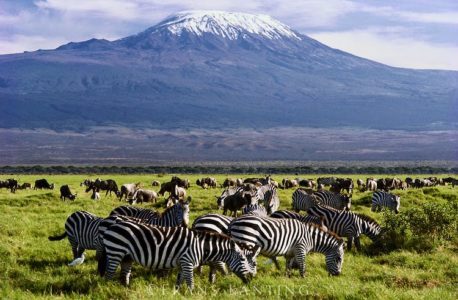
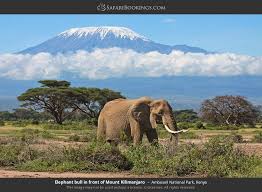
After breakfast have a whole day game viewing. Amboseli National Park has the combination of scenery, people and animals is what makes the Amboseli national park of fascinating. Beautifully situated at the foot of the towering Kilimanjaro, it Is the home of the brightly painted Maasai tribe, here you can see lions, cheetahs, spotted hyenas and wild dogs as well as gnus, Kaffir buffaloes, Burch ells zebras and herds of elephants. All these animals come to drink at water holes consisting of small lakes or muddy ponds kept filled up by water from the melting snows of Kilimanjaro. The northern lake Amboseli contains water only after rain. There are over 900 African elephants in this park, as well as huge herds of wildebeests and many other animals including giraffes, African lions, monkeys, zebras, hyenas and antelopes.With its awesome view of Mount Kilimanjaro (Africa's highest mountain at 5,895m), Amboseli National Park offers a unique and breathtaking backdrop for viewing Africa's animals. It also has a dry Pleistocene lake basin that houses a temporary lake, Lake Amboseli, after the rains.Amboseli offers some of the best opportunities to see African animals because its vegetation is sparse due to the long dry months. Amboseli National Park is home to wild animals, which include the African elephant, buffalo, impala, lion, cheetah, hyena, giraffes, zebra, and wildebeest among other African animals. There is also a host of Kenya birds, both large and small, to see if you keep your eyes open and stop at every sighting.Visit Observation Hill, which overlooks the park, swamps and, of course, the herds of free-roaming elephants. Meet the Maasai people and learn about the Maasai culture and their indigenous lifestyle.Bird watching is best between October and January if you want to see Kenya's migratory birds, including African skimmers, red and yellow bishops, goshawks, buffalo weavers and palm nut vultures, to name a few. Return to the camp for Dinner and Overnight.Main Destination: Amboseli National Park
Accommodation: Budget camping• Just outside Amboseli
Meals & Drinks:
• All meals included
• Drinking water (Other drinks not included)
Day 11: Amboseli / Tsavo west national park
After breakfast, drive via Chyullu hills to Tsavo West National Park, arriving in time for lunch. Afternoon game viewing drive and a visit to Mzima Springs; (The source of drinking water for Mombasa). Tsavo West forms one of the largest wildlife conservation areas on Earth and is one of the largest national parks in Kenya. The park has abundant wildlife, but due to its size and thicker vegetation game viewing is more challenging. For this reason it is less popular than the Maasai Mara and Amboseli. However, the park has one of the most diverse landscapes in East Africa, with several volcanic craters and interesting hills.Wildlife Includes: elephant, rhino, lion, leopard, crocodile, waterbuck, kudu, gerenuk and zebra. It is a home to some of the largest herds of elephants in Kenya. 500 bird species are recorded including ostrich and some migratory kestrels and buzzards stop at It is the only place you can see the remaining Hirola antelope among other wildlife.Main Destination: Tsavo West National Park
Accommodation: Budget camping• Inside Tsavo West
Meals & Drinks:
• All meals included
• Drinking water (Other drinks not included)
Day 12: Tsavo West / Tsavo East national park
After breakfast, drive to Tsavo East National Park which is renowned for its large numbers of Elephants and the famous Man Eating Lions (during the building of the Kenya / Uganda Railway in 1890). Tsavo East and Tsavo West N.P form the largest reserve in East Africa. Nevertheless the Tsavo national park is one of the most visited tourist attraction in Kenya. In spite of its arid countryside and savannah vegetation about 60species of mammals and 400 different species of birds are to be found here. The Tsavo is particularly famous because of its dramatic scenery and the Red Elephants which owe their colors to the dust prevalent in this area as well as lions and cheetahs. There are many antelopes (Oryx, kudus, giants gazelles and giraffe) Burchell's zebras, Masai giraffes baboons and vervet monkeys of the birds the most impressive is the Maasai ostrich. Where there is water such as at Mzima springs, crocodiles and hippos can also be seen. When driving along the red-earth tracks, keep eyes open for the movement and signs of African wildlife, the more you look the more you will see , don’t forget to enjoy the excitement of the trip as you point out the wildlife , it will be amazing to see the wildlife living in close proximity to the other , see the huge animals , keep the eyes open for the giraffes –they are surprisingly well camouflaged as they nibble the tops of trees, look under the shady trees to find lions sleeping after a hunt out , and watch out as gazelles and cheetahs stroll across the road just in front of you. The safari extends to Chyulus hills, volcanic mountain range with a mix of volcanic cones and barren lava flows, of which the most interesting in Shetani, meaning "Devil" in Swahili. Game include: buffalo, zebra, giraffe, oryx, lion, leopard and many species of birds and plants.Tsavo East boasts of bushy grassland and open plains alternate with savannah and semi-arid acacia scrub and woodlands The Yatta plateau is the world's largest lava flow. Dinner and Overnight at a camp or lodge.Main Destination:
Day 13: Tsavo East National Park
Accommodation: Budget camping• Just outside Tsavo East NPMeals & Drinks:• All meals included• Drinking water (Other drinks not included)Day 13: Tsavo East / Nairobi or MombasaAfter breakfast, you will have a final game drive in Tsavo East national park before the tour returns back to Nairobi. An option to proceed to Mombasa for further vacation at the coast can be arranged at an extra cost. Main Destination: No major destination visited Accommodation: No accommodation (End of tour) Meals & Drinks:• Breakfast & lunch (Dinner not included)• Drinks not included• Additional accommodation can be arranged for an extra cost.• You'll be dropped off at the airport (or hotel).
Price Per Person Sharing 2pax 4pax
High Season: January-March $ 2430 $ 1950
Low Season: April-May $ 2380 $ 1900
Mid-Season: June-June $ 2380 $ 1820
Peak Season: July-October $2550 $2050
Shoulder Season: November- 20.December $2430 $1950
Festive Season: 23.December -02.January $2550 $2050
Included• Park fees (For non-residents)• All activities (Unless labeled as optional)• All accommodation (Unless listed as upgrade)• Camping equipment (Sleeping bag excluded)• A professional driver/guide• All transportation (Unless labeled as optional)• All Taxes/VAT• Round trip airport transfer• Meals (As specified in the day-by-day section)• Drinks (As specified in the day-by-day section)• Bed linen• Bath towels
Excluded• International flights (From/to home)• Additional accommodation before and at the end of the tour• Tips (Tipping guideline US$10.00 pp per day)• Personal items (Souvenirs, travel insurance, visa fees, etc.)• Government imposed increase of taxes and/or park fees
Own this tour company?
Claim it to update its details and photos, add what you offer, reply to travellers and promote it on Wapota. It’s free.
Claim this listing →Own this tour company?
Claim it to update its details and photos, add what you offer, reply to travellers and promote it on Wapota. It’s free.
Claim this listing →