
About
Baly Bay National Park, located in the north-western part of Madagascar, approximately 164 kilometers from Mahajanga in the Soalala District of the Boeny Region, spans an area of 57,418 hectares. It is bordered by the Mozambique Channel to the north and the Bay of Marambitsy to the east, with the Kapiloza River forming its southern boundary and the Andranomavo River traversing the park. The park is characterized by a Western ecoregion climate, experiencing predictable wet seasons and distinct dry periods. Its diverse landscape encompasses four primary ecosystems: dense dry semi-caducifolia forests, bamboo shrub thickets, mangroves, and various aquatic environments. Additional habitats include Tsingy formations, wooded savannahs, degraded forests, secondary thickets, grasslands, swamps, and peat bogs. The park also features several permanent bodies of water, crucial for nesting waterfowl.
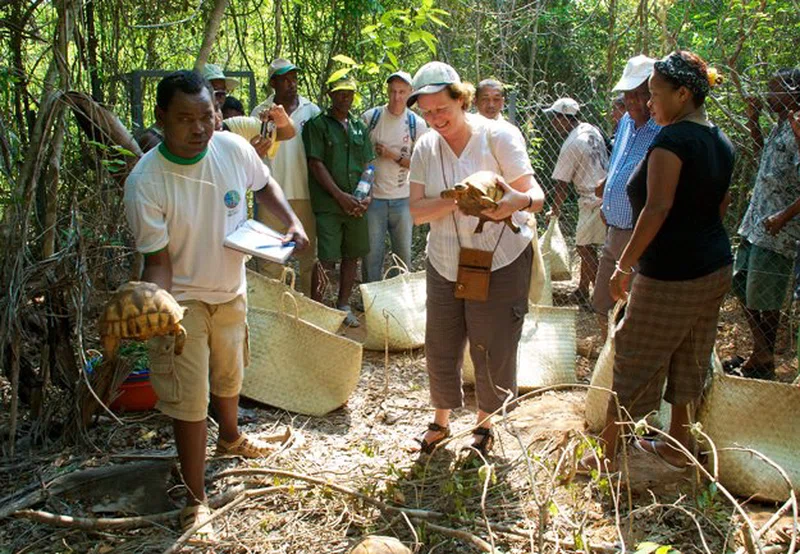
This national park is globally significant as the sole natural habitat for the critically endangered Angonoka tortoise (Astrochelys yniphora), also known as the ploughshare tortoise. Other critically endangered species found here include the Madagascar fish eagle (Haliaeetus vociferoides). The park is a haven for a rich array of wildlife, including 13 mammal species, with 8 types of lemurs such as Decken's sifaka and western bamboo lemurs. Marine life is also prominent, with dugongs and five species of sea turtles (Green, Hawksbill, Loggerhead, Olive Ridley, and Leatherback) utilizing the beaches for egg-laying. Over 120 bird species, including sacred ibises, plovers, and flamingos, inhabit the area, alongside 35-37 reptile species like chameleons and snakes, and several amphibian species. The flora is equally unique, featuring the endemic Perrierbambus madagascariensis bamboo and the poisonous Erythrophleum couminga tree.
Visitors to Baly Bay National Park can engage in various activities, including hiking, wildlife watching, and scuba diving in the coral reefs. Camping is possible on specific tours like Beaboaly and Bemosary, and in the village of Betanomby on the Lac Sariaka tour. All visits require accompaniment by Madagascar National Parks agents or local villagers. The park also holds deep cultural and historical importance for local communities, with traditions such as ancestor worship and ceremonies like "Fanompoana" and "Fitampoha". Sacred sites, including the region's first mosque, tombs of Sakalava kings, and places associated with royal burial rituals, underscore its cultural heritage. Conservation efforts are actively managed by Madagascar National Parks in collaboration with local communities and supported by organizations like the FAPBM, focusing on biodiversity protection and sustainable development initiatives.
Own this park or reserve?
Claim it to update its details and photos, add what you offer, reply to travellers and promote it on Wapota. It’s free.
Claim this listing →