
About
Cape Cross is a historically significant headland and a vital natural reserve located on Namibia's Skeleton Coast, approximately 120 km north of Swakopmund. It holds the distinction of being the first point in Namibia visited by a European explorer, Portuguese navigator Diego Cão, who landed here in 1486 and erected a stone cross, or padrão, to mark his journey. Replicas of this original cross, which is now housed in a museum in Berlin, stand on site today, contributing to the area's designation as a National Heritage Site. In the late 1800s, Cape Cross was a bustling settlement involved in guano collection and seal harvesting, complete with a police station, customs office, post office, and Namibia's first railway, built to transport workers across the salt pan.
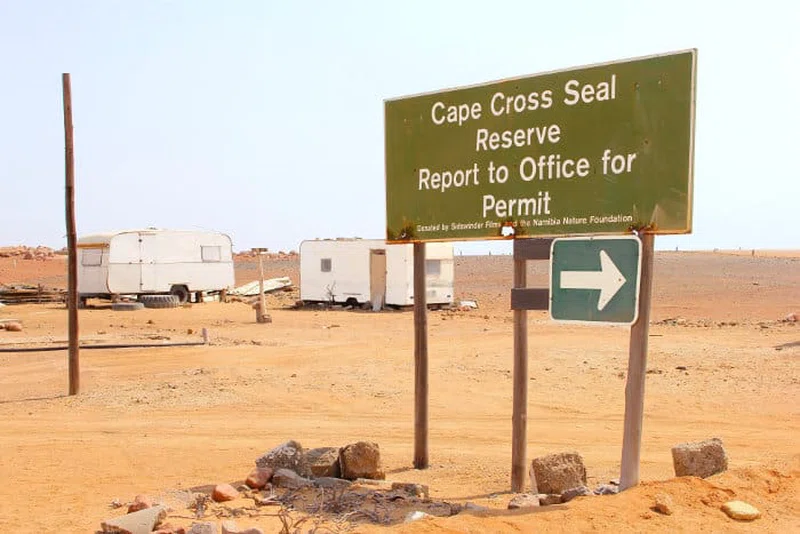
Today, Cape Cross is primarily renowned as the Cape Cross Seal Reserve, a 60 km² sanctuary established in 1968, home to the world's largest breeding colony of Cape fur seals. During the breeding season in November and December, the colony can swell to over 200,000 to 210,000 seals, creating a spectacle of "deafening shouts and heavy smells". Visitors can observe the captivating interactions of the seals, including the birth of pups, from an extensive walkway with information signs. The reserve's natural features include a rocky bay, sandy beaches, and a salt pan, with sparse vegetation characteristic of the Central Desert biome, such as dollar and pencil bushes, and various lichens. Beyond the seals, the area supports diverse wildlife, including brown hyenas, black-backed jackals, and various bird species like flamingos and Damara terns. The fragile lichen plains in the hinterland are a unique feature that visitors are advised to protect by staying on established paths.
Cape Cross is one of Namibia's most visited parks, offering renovated picnic areas and five campsites. It serves as a gateway to other notable attractions such as the Messum Crater, an ancient volcanic landscape featuring the endemic Welwitschia mirabilis plant and prehistoric rock paintings, and the Ugab Gate entrance to the Skeleton Coast Park, known for its shipwrecks. While sustainable seal harvesting is managed by the Ministry of Fisheries and Marine Resources, it remains a point of contention with animal rights groups. Accommodation is available at a private lodge bordering the park, providing a base for exploring the unique coastal and desert environment.
Own this park or reserve?
Claim it to update its details and photos, add what you offer, reply to travellers and promote it on Wapota. It’s free.
Claim this listing →