
About
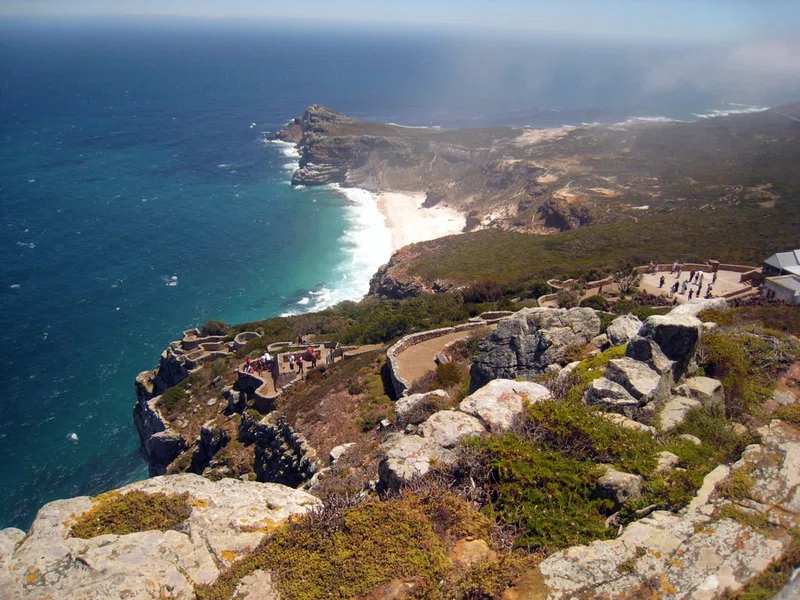
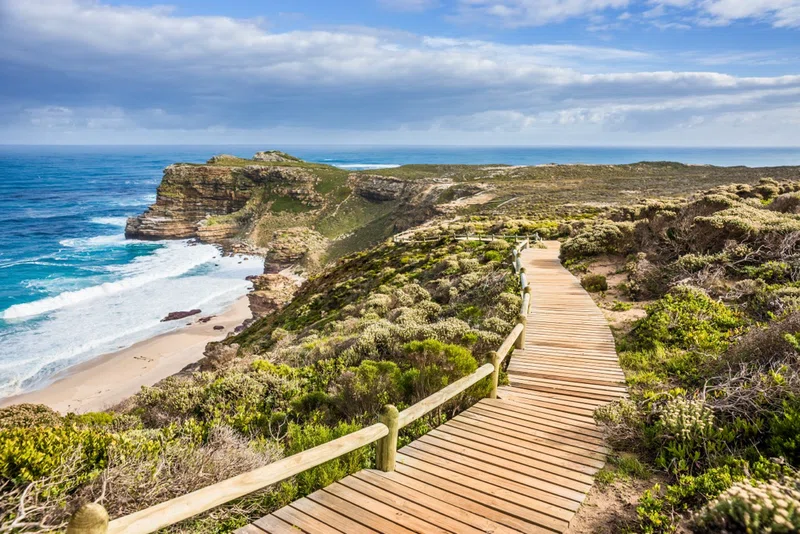
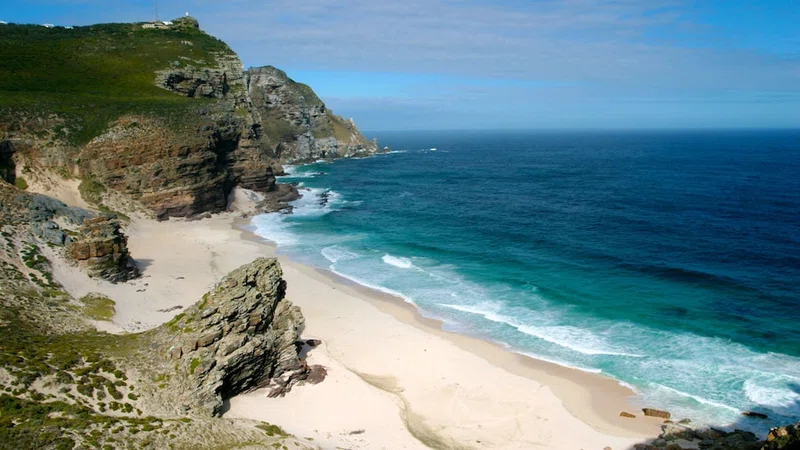
The Cape of Good Hope is a rocky headland and nature reserve situated at the southern extremity of the Cape Peninsula in the Western Cape, South Africa, approximately 50 kilometers south of Cape Town. Spanning roughly 77.5 square kilometers, it forms the southernmost section of Table Mountain National Park. Geologically dominated by the sandstone formations of the Cape Supergroup, the landscape features dramatic ocean-facing cliffs, coastal plateaus, and sandy shorelines such as Diaz Beach and Maclear Beach. While widely recognized as the most southwestern point of the African continent, the actual southernmost tip of Africa is Cape Agulhas, located about 150 kilometers to the east-southeast.
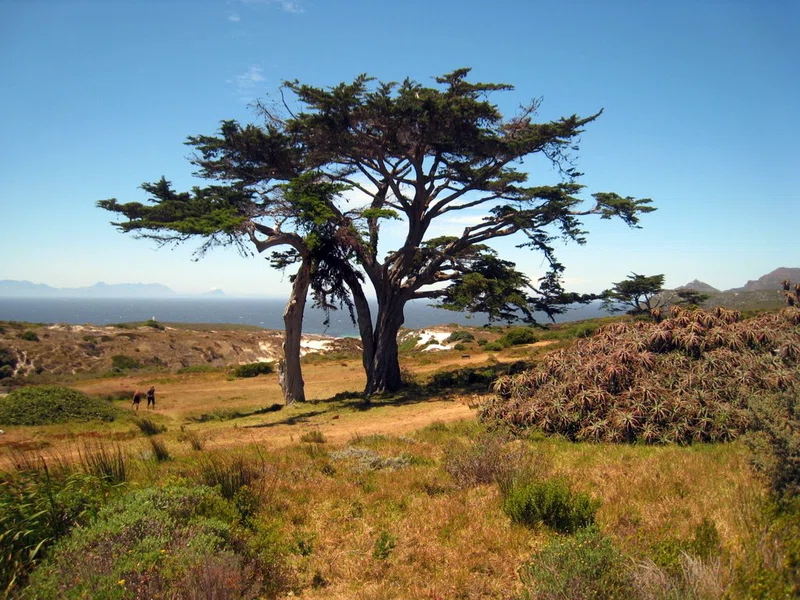
As part of the UNESCO World Heritage-listed Cape Floral Region, the reserve protects endangered Peninsula Sandstone Fynbos vegetation and over 1,100 indigenous plant species, including numerous proteas, ericas, and restios. Wildlife in the park includes native mammals such as bontebok, eland, red hartebeest, grey rhebok, and Cape mountain zebra, alongside rock hyraxes and protected troops of chacma baboons. Over 250 bird species inhabit the area, ranging from ostriches to coastal seabirds. Offshore, the surrounding Marine Protected Area marks a dynamic oceanographic zone where the cold Benguela and warm Agulhas currents meet, supporting Southern right whales, humpback whales, Cape fur seals, and marine life.
First rounded by Portuguese navigator Bartolomeu Dias in 1488, who initially named it the Cape of Storms, the headland holds historical maritime importance as a key waypoint on trade routes between Europe and Asia. Key infrastructure and features within the reserve include the historic 1859 Cape Point Lighthouse, the Flying Dutchman Funicular leading to upper coastal viewpoints, the Buffelsfontein Visitor Centre, and commemorative navigational beacons such as the Dias and da Gama crosses. Outdoor activities available to visitors include hiking along trails like the two-day Cape of Good Hope Trail, road cycling, angling, and utilization of tidal pools and picnic areas at Buffels Bay and Bordjiesrif.
Own this park or reserve?
Claim it to update its details and photos, add what you offer, reply to travellers and promote it on Wapota. It’s free.
Claim this listing →