
About
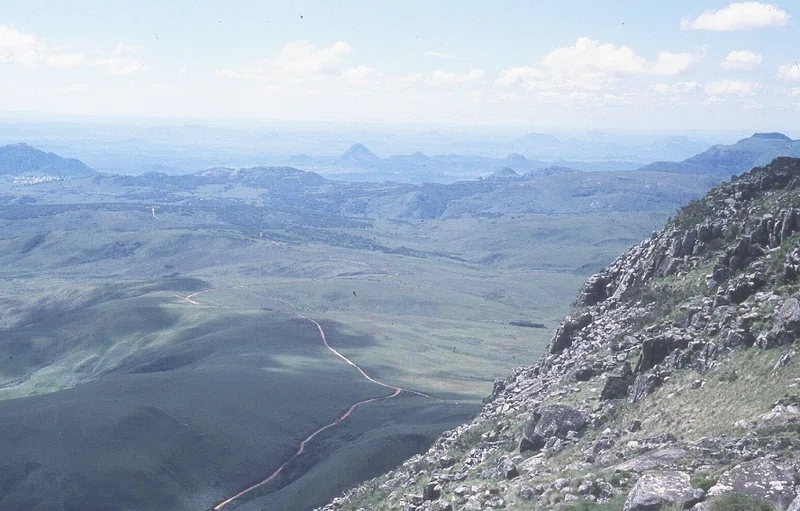
Chimanimani National Park, located in the Sussundenga district of Mozambique's Manica Province, borders Zimbabwe and encompasses the majestic Chimanimani Mountains, including Monte Binga, Mozambique's highest peak at 2,436 meters. Established as a national reserve in 2003 and later designated a national park in 2020, it forms part of the larger Chimanimani Transfrontier Conservation Area (TFCA) with Zimbabwe's Chimanimani National Park and Eland Sanctuary. This rugged mountainous wilderness, characterized by quartzite mountains, cascading rivers, and virgin forests, is a biodiversity hotspot with a rich ecosystem. The name "Tshimanimani" itself, meaning "to be squeezed together," aptly describes the narrow gorge through which the Musapa River forces its passage.
The park boasts a diverse array of flora and fauna. Its Afro-montane forests and montane grasslands are home to over 1000 vascular plant species, with 45 being endemic to the region, including the rare Barrosus Palm tree and various Protea, Erica, and Helichrysum species. While wildlife populations are not abundant, species such as eland, sable, bushbuck, blue duiker, klipspringer, oribi, suni, reedbuck, waterbuck, warthog, and occasional leopards can be spotted. The area is also a haven for birdwatchers, with over 160 bird species, and a significant number of reptile, amphibian (including two endemic species), and butterfly species.
Visitors to Chimanimani National Park can engage in a variety of activities that embrace its wild and unspoiled character. Hiking is a primary draw, with trails ranging from moderate to arduous, leading to sparkling waterfalls, natural swimming pools, and breathtaking scenic views. Mount Binga is a popular climbing destination, and other activities include horseback riding, photo safaris, canoeing, and bird watching. For the adventurous, camping is permitted throughout the park (except at base camp), with options to stay in the communal Mountain Hut or even disused mine shafts like Terry's or Peter's caves. The park also holds cultural significance, with local communities preserving ancient cave paintings, beliefs, and traditions. The best times to visit are typically March/April and August/September, avoiding the coldest winter months and the heavy rains.
Own this park or reserve?
Claim it to update its details and photos, add what you offer, reply to travellers and promote it on Wapota. It’s free.
Claim this listing →