
About
Isangano National Park, established in 1972, is a tranquil and largely underexplored protected area spanning 840 square kilometers in Zambia's Northern Province. It is strategically located at the northeastern edge of the vast Bangweulu Wetlands, encompassing a diverse landscape of low-lying floodplains, well-watered grasslands, swampy forests, and miombo woodlands. The park's flat terrain, with an average elevation of about 1200 meters, experiences significant seasonal flooding from the Lukutu, Lubansenshi, and Chambeshi rivers, which flow through or along its boundaries. This dynamic water system creates a unique ecological zone, though it also presents challenges for accessibility.
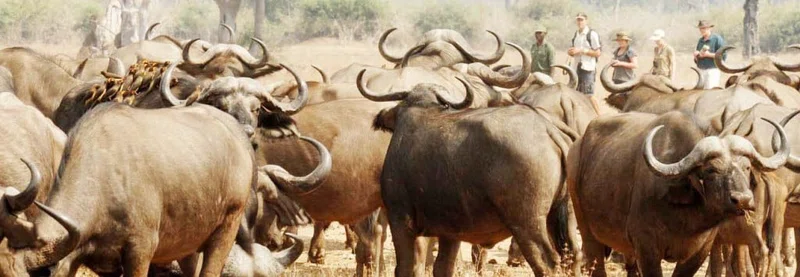
The park is particularly renowned for its rich birdlife, boasting over 300 species, making it a prime destination for birdwatchers. Key avian highlights include the rare and endangered shoebill stork, often found in the papyrus swamps, as well as black crowned night herons, Denham's bustards, flamingos, wattled cranes, and saddle-billed storks. While historical accounts from explorers like David Livingstone in 1873 noted abundant game, wildlife populations, including elephants, buffalo, hippos, crocodiles, zebra, and various antelopes like reedbuck, oribi, sitatunga, and tsessebe, have faced challenges due to illegal human settlements and poaching. However, conservation efforts are underway to restore the park's animal populations, with the black lechwe, an antelope endemic to the Bangweulu basin, being a significant draw, congregating in large herds during the dry season.
Isangano National Park offers an authentic wilderness experience, appealing to adventurous travelers seeking solitude away from bustling tourist crowds. Activities primarily include birdwatching, canoe safaris, game viewing, photography, and nature walks. Due to its remote location and limited infrastructure, there are no permanent visitor facilities, lodges, or entry gates within the park. Access is challenging, requiring a 4x4 vehicle, especially during the dry season from May to October when water levels are lower and roads are more passable. The rainy season, from November to April, often renders parts of the park inaccessible for game drives, though canoe trips remain an option, transforming the area into a lush wetland paradise for migratory birds. Visitors are advised to arrange their trips with professional guides or tour operators familiar with the region.
Own this park or reserve?
Claim it to update its details and photos, add what you offer, reply to travellers and promote it on Wapota. It’s free.
Claim this listing →