
About
Jozani Forest, officially known as Jozani Chwaka Bay National Park, is Zanzibar's only national park, encompassing an area of 50 square kilometers. It is strategically located approximately 38 kilometers southeast of Stone Town, making it an accessible day trip destination with a travel time of about 40 minutes by car or taxi. The park's landscape is characterized by a rich mosaic of ecosystems, including groundwater forests, coastal forests, grasslands, lush swamp forests, evergreen thickets, and significant mangrove areas. The low-lying terrain is susceptible to flooding, which contributes to its verdant, moisture-rich environment, supporting diverse flora such as ancient Mahogany trees and various medicinal plants. A notable feature is the boardwalk that allows visitors to explore the intricate mangrove forests, which serve as vital breeding grounds for marine life and birds. The adjacent Chwaka Bay is recognized for its ecological importance and is proposed as a Ramsar Site and a tentative World Heritage Site.
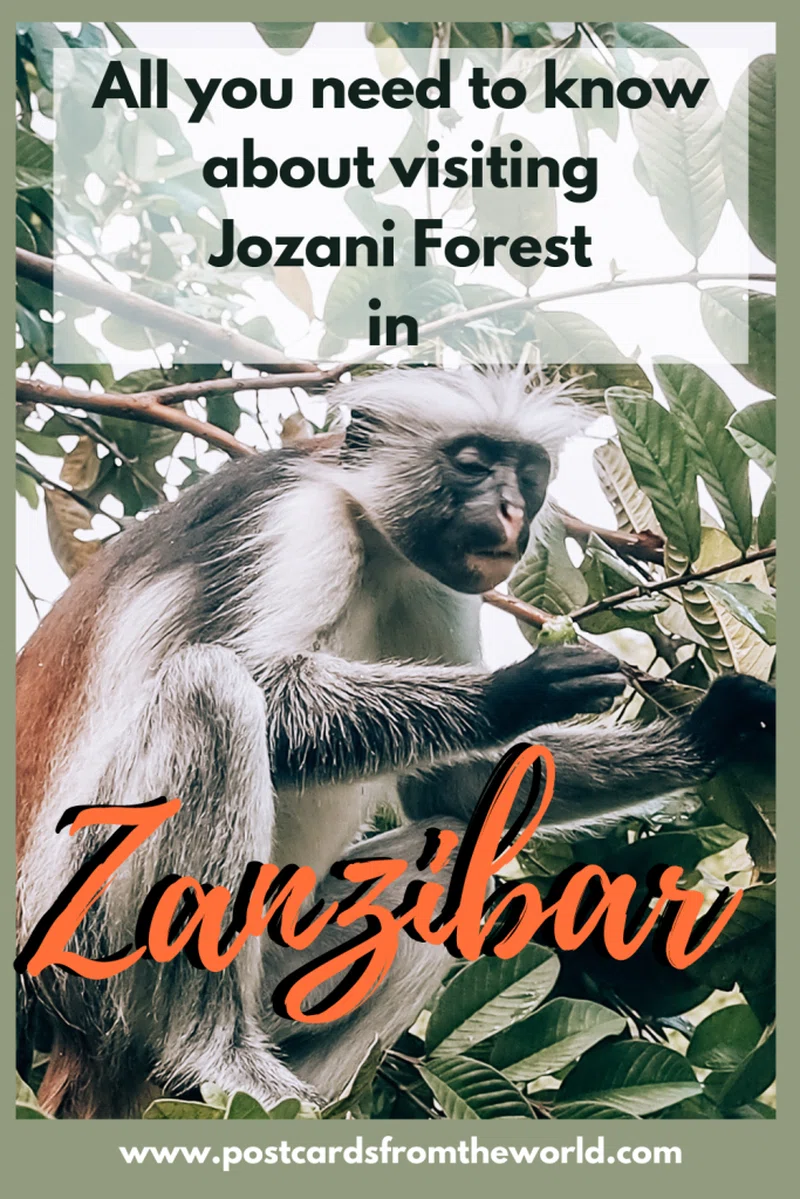
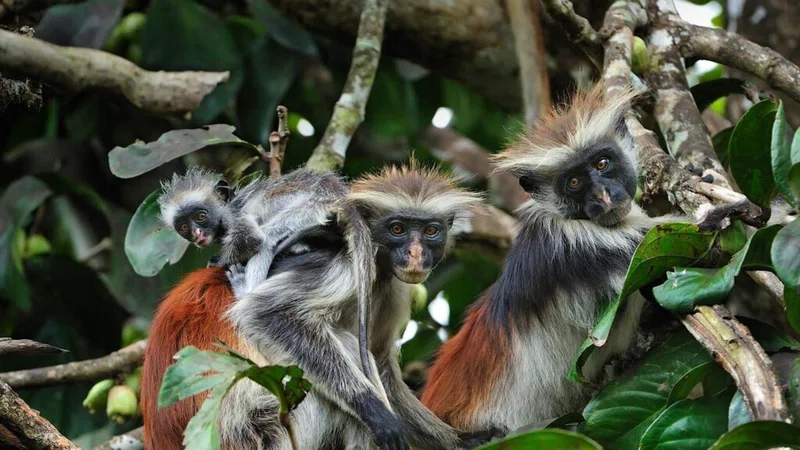
The forest is globally renowned as a critical sanctuary for the endangered Zanzibar red colobus monkey (Procolobus kirkii), an endemic species found exclusively on Zanzibar. These monkeys, numbering between 1,000 and 5,000 individuals, are accustomed to human presence, offering visitors unique opportunities for close observation. Beyond the red colobus, the park is home to other diverse wildlife, including Sykes' monkeys, bush babies, the rare Aders' duiker, suni antelopes, African civets, and over 50 species of butterflies. As an Important Birding Area, Jozani Forest hosts more than 40 bird species, such as Fischer's turacos, mangrove kingfishers, and Zanzibar red bishops. While some highly venomous snakes inhabit the deeper parts of the forest, more commonly observed reptiles include lizards, chameleons, geckos, and tortoises. Guided nature walks through the forest trails and mangrove boardwalks are primary activities, allowing visitors to immerse themselves in the park's biodiversity and learn about conservation efforts.
Historically, Jozani Forest was established as a forest reserve in the early 1960s and later upgraded to a national park in 1984 to safeguard its unique wildlife. The park holds deep cultural significance for the local Hadimu communities, whose Bantu cultural practices and rituals are intertwined with the land. Sacred shrines and religious celebrations are part of the area's cultural heritage. Ecotourism plays a crucial role, with revenue-sharing programs from park entrance fees contributing to the development of local schools and health clinics, fostering a sustainable relationship between conservation and community well-being.
Safari Tours
 luxury7 days


 luxury12 days
luxury
12-Day Kenya, Tanzania Safari & Zanzibar Beach Holiday
$5,610
 Royal tiger Tours and safaris trading as Royal Tiger Tours and Safaris

Own this park or reserve?
Claim it to update its details and photos, add what you offer, reply to travellers and promote it on Wapota. It’s free.
Claim this listing →