
About
The Ngorongoro Conservation Area (NCA) is a vast protected area situated in northern Tanzania, approximately 180 km west of Arusha City in the Arusha region. Covering an expanse of 8,292 square kilometers (3,200 sq miles), it forms a crucial part of the larger Serengeti-Ngorongoro-Mara Ecosystem. The landscape is remarkably diverse, featuring grassland plains, savanna woodlands, dense forests, towering mountains, and various volcanic craters, alongside lakes, rivers, and swampland.
The most iconic natural feature is the Ngorongoro Crater, recognized as the world's largest inactive, intact, and unfilled volcanic caldera. This breathtaking crater measures about 20 km across, is 600 meters deep, and encompasses an area of 300 sq km. Other significant geological formations include the Olmoti and Empakaai craters, with the latter notable for its deep emerald soda lake. The area also hosts the Ndutu Plains, the historically significant Olduvai Gorge and Laetoli Footprints, Olkarien Gorge, Nasera Rock, Shifting Sands, Gol Mountains, and Mount Lolmalasin, which is the highest crater mountain within the NCA.
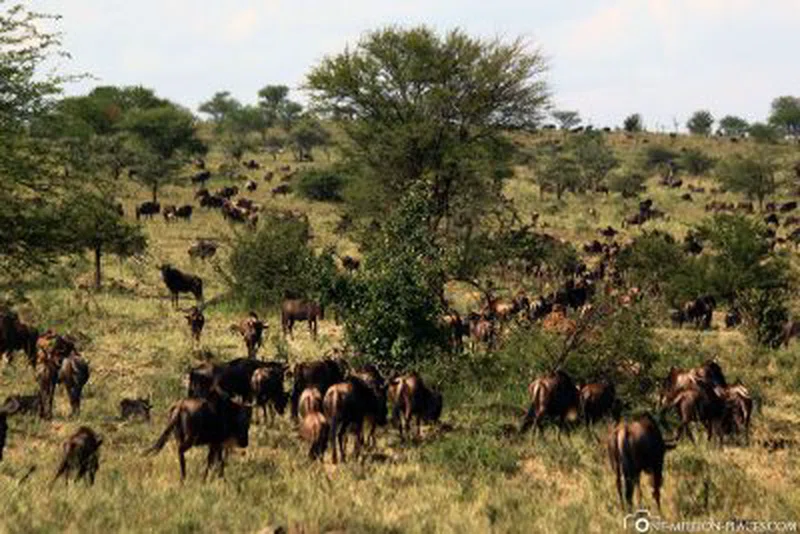
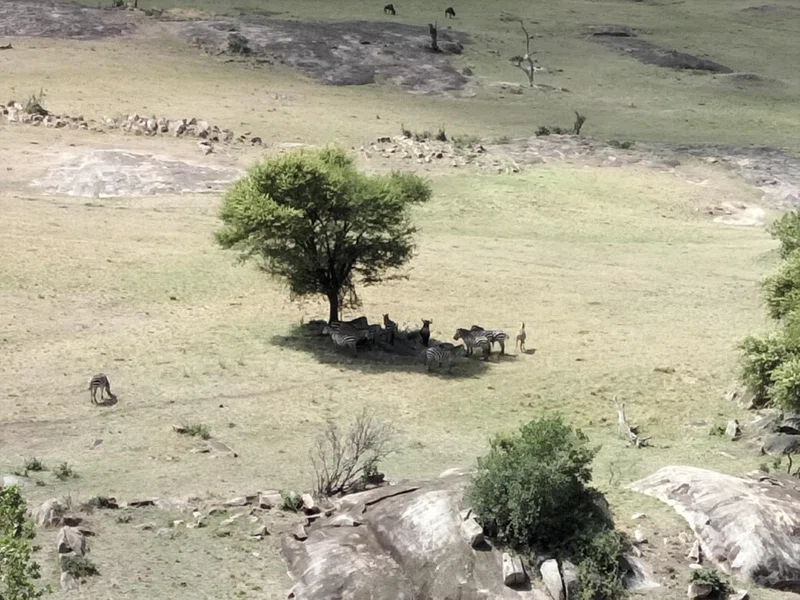
The NCA is a globally important reservoir of large mammal biodiversity, home to an estimated 25,000 large animals, primarily ungulates, within the crater. These include extensive herds of wildebeest, plains zebras, and Thomson's and Grant's gazelles. The area also supports a high density of predators such as lions, spotted hyenas, leopards, and cheetahs, and is a habitat for the endangered black rhinoceros and African hunting dog. Over 400 bird species, including numerous flamingos, thrive here. The annual Great Migration, involving millions of wildebeest, zebras, and gazelles, traverses the NCA. Popular activities for visitors include game drives, climbing, trekking, bird watching, walking safaris, and cultural visits to indigenous communities like the Hadzabe, Datoga, and Maasai, who maintain their traditional lifestyles within the area.
Established in 1959, the Ngorongoro Conservation Area was designed as a multi-land use area, allowing wildlife to coexist with the semi-nomadic Maasai pastoralists. It was inscribed as a UNESCO World Heritage Site in 1979, recognized for both its outstanding natural values and its profound cultural significance. The Olduvai Gorge is one of the world's most critical paleoanthropological sites, offering an unparalleled record of human evolution spanning nearly two million years, with discoveries of early hominins such as Homo habilis and Paranthropus boisei. The Laetoli Footprints further underscore the area's importance in understanding early human history.
Own this park or reserve?
Claim it to update its details and photos, add what you offer, reply to travellers and promote it on Wapota. It’s free.
Claim this listing →