
About
Northern Kruger National Park encompasses the vast northern expanse of the renowned Kruger National Park in South Africa, stretching from the Tropic of Capricorn southwards to the Olifants River, and further north to the Limpopo River, which forms the international boundary with Zimbabwe and South Africa. This region is characterized by its unique tropical environment and a geological base primarily of sandstone, contrasting with the granite and basalt found elsewhere in the park. The terrain is largely arid and flat, dominated by mopane woodlands and shrubveld, though areas around Punda Maria benefit from higher localized rainfall, leading to dense mopane groves. Towards the north of Punda Maria, the landscape transforms with craggy sandstone hills and numerous giant Baobab trees. The extreme north-west features sandveld with sandy, well-drained soils supporting a complex array of plant communities. The area also lies on the Limpopo Mobile Belt fault-line, evidenced by hot springs in the Pafuri area.
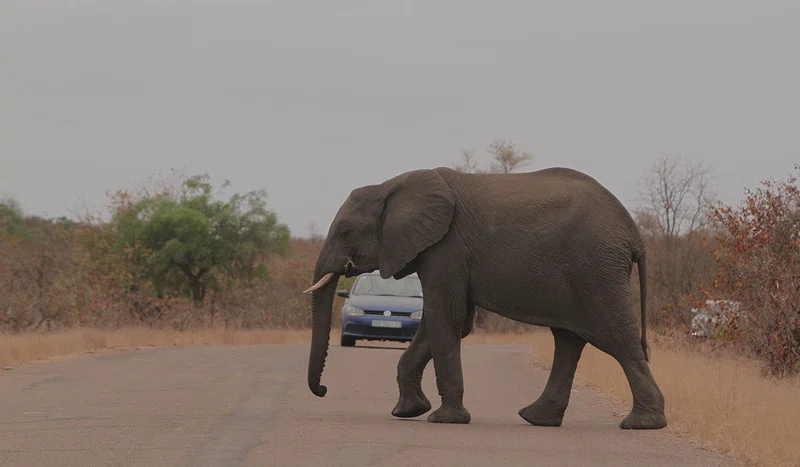
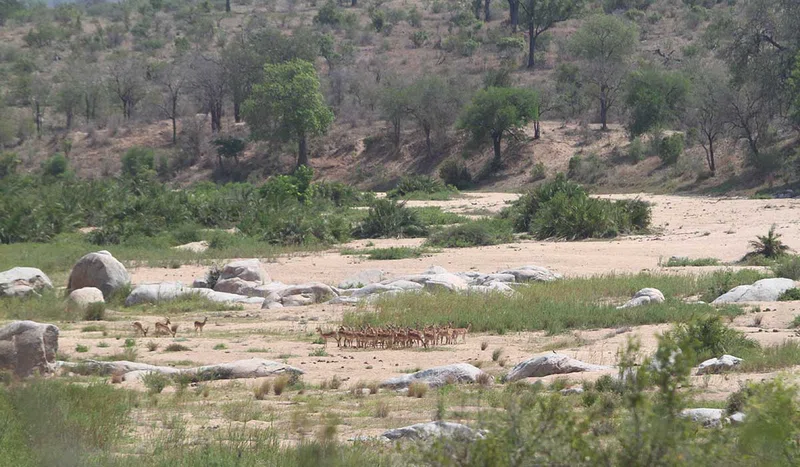
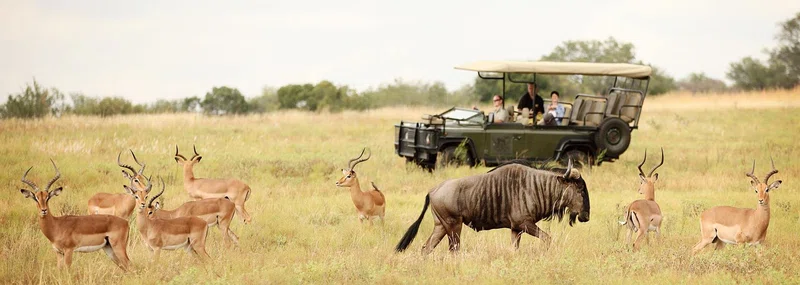
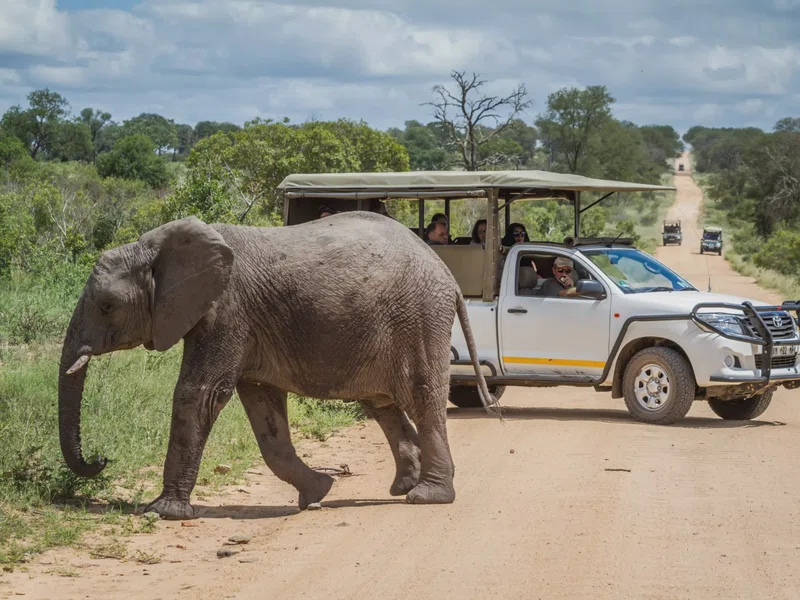
Despite having a lower animal carrying capacity than the southern parts of Kruger, the Northern Kruger offers exceptional wildlife viewing, particularly along its river systems such as the Mphongolo/Shingwedzi and Luvuvhu/Limpopo complexes. It is a prime destination for birding, with the Shingwedzi flood plains being a top summer birding spot, and features sleep-over hides near Phalaborwa Gate and Mopani Rest Camp. The region is famous for its "big tuskers," with many of the legendary Magnificent Seven elephants having inhabited the Shingwedzi flood plains. Common sightings include abundant buffalo and elephant, while predators like lion, cheetah, and leopard are regularly observed. The riverine forests along the Luvuvhu River are particularly good for spotting nyala, a tropical antelope, as well as the elusive bushbuck. The northern sandveld is also one of the best places to see eland, the largest African antelope.
The Northern Kruger National Park, as part of the larger Kruger National Park, contributes to the park's overall diversity of 336 tree species, 49 fish, 34 amphibians, 114 reptiles, 507 birds, and 147 mammals, including the iconic Big 5. The region also holds historical significance, with sparse, isolated hills in the west containing rich prehistoric artifacts. Rest camps like Mopani, Shingwedzi, and Punda Maria provide accommodation and access to this distinct wilderness.
Own this park or reserve?
Claim it to update its details and photos, add what you offer, reply to travellers and promote it on Wapota. It’s free.
Claim this listing →