
About
Nosy Hara National Park is situated in northern Madagascar, specifically within the Diana Region, off the northwest coast in the Baie de Courrier (Courrier Bay), approximately 30 km east of Antsiranana (Diego Suarez). The name "Nosy Hara" translates to "mountainous island," a reference to its distinctive needle stone rock formations. Established as a national park and marine reserve in 2012, the protected area spans 125,471 hectares, with the main island of Nosy Hara covering about 3.2 km² or 312 hectares. The park encompasses an archipelago of roughly twelve uninhabited islands, all encircled by vibrant coral reefs. The island's terrain is characterized by a karst plateau featuring typical Tsingys (limestone pinnacles), steep cliffs, and small dry forests. Its geomorphology, shaped by erosion and marine activity, has created unique rock formations and marine cavities. The surrounding coral reef is largely intact and boasts exceptional biodiversity, complemented by mangroves and seagrass beds.
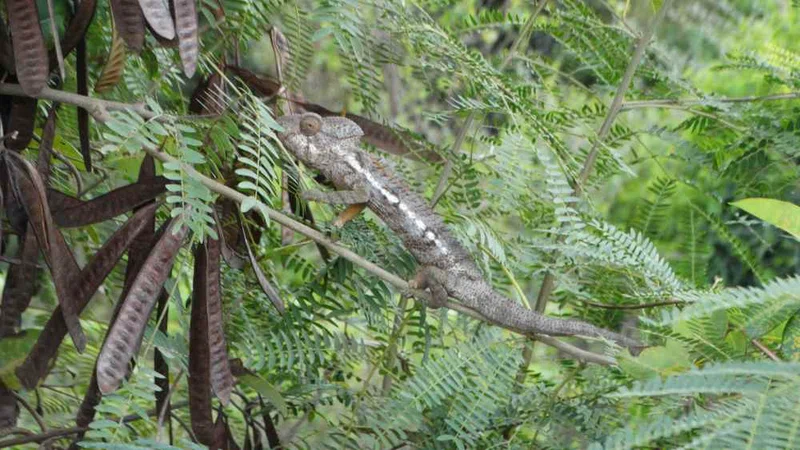
The park is a haven for diverse wildlife, both on land and in its marine environments. Terrestrial fauna includes over 30 bird species, nearly 20 reptile species, and several amphibians. It is globally recognized as the habitat of Brookesia micra, one of the world's smallest chameleons, which is endemic to Nosy Hara. Other notable reptiles found here are the gecko Paroedura fasciata, panther chameleons (Furcifer pardalis), Blaesodactylus boivini, and fish-scale geckos (Geckolepis ssp.). The critically endangered Madagascar Fish Eagle (Haliaeetus vociferoides) soars above, while Malagasy Ground Boas (Acrantophis madagascariensis) can be found on the ground. In 2015, scientists discovered undescribed dwarf lemurs within the island's dry forest. The marine ecosystem is equally rich, supporting nearly 80 fish species, over 50 mollusk species, and 108 coral species. Five species of sea turtles regularly nest here, and dugongs, migrating whales, and dolphins are also observed.
Visitors to Nosy Hara National Park can engage in various activities, including hiking on Nosy Hara island, guided islet tours, birdwatching, snorkeling, swimming, and sport fishing. Rock climbing is also an option for adventure seekers. Snorkeling is particularly popular due to the crystal-clear waters and abundant marine life. The park's conservation efforts are rooted in local traditions, as the Sakalava people have historically considered the islands "fady" (sacred or taboo), contributing to their preservation. The park's management involves collaborative co-management with local communities, ensuring their participation in conservation and development initiatives.
Own this park or reserve?
Claim it to update its details and photos, add what you offer, reply to travellers and promote it on Wapota. It’s free.
Claim this listing →