
About
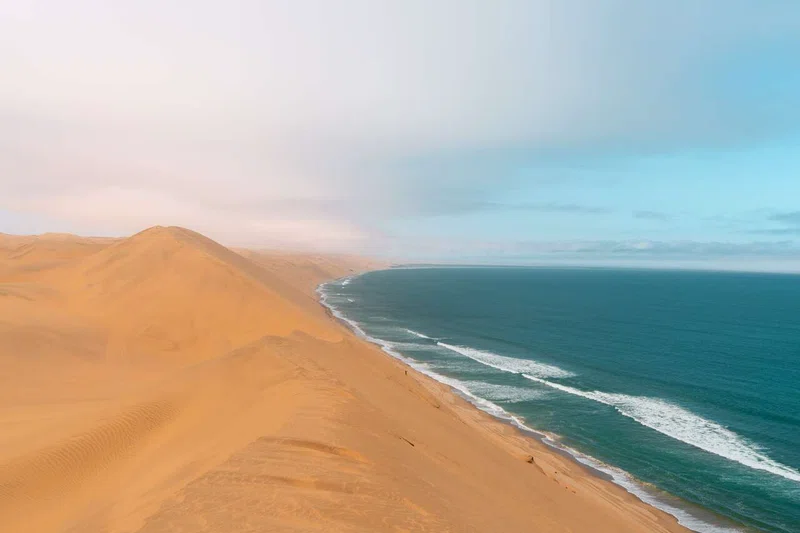
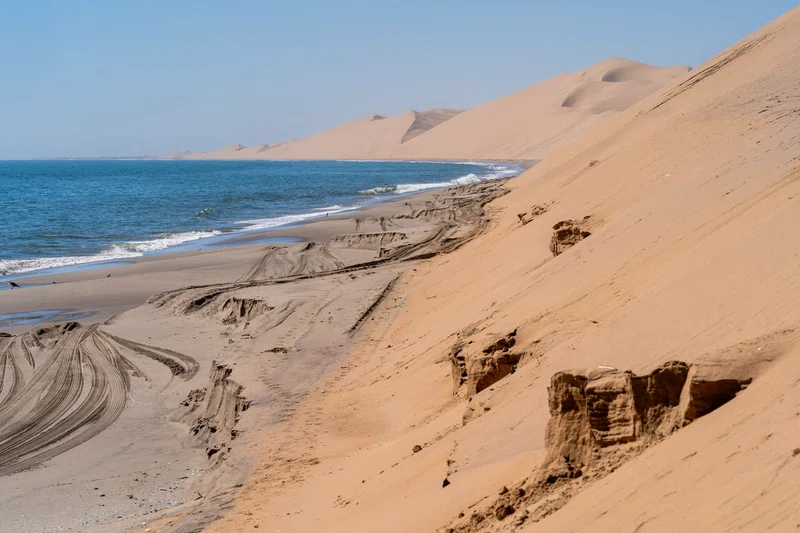
Sandwich Harbour is a dramatic and unique coastal area located approximately 60-80 km south of Walvis Bay, Namibia, within the vast Namib-Naukluft National Park. It is renowned for its breathtaking scenery where some of the world's highest sand dunes plunge directly into the cold Atlantic Ocean, creating a striking contrast of desert and sea. The area includes a bay in the north and a 10 km long lagoon at its southern end, which is completely surrounded by sand and reeds. This unique geographical feature, once an oceanic bay, has largely silted up, transforming into a brackish lagoon.
Historically, Sandwich Harbour, also known by names like Porto d'Ilhéu and Sandvishawe, has a rich past. It was surveyed by the Royal Navy in the 1880s and briefly served as a moderately-sized commercial port in the 19th century, primarily for whaling, small-scale fishing, and guano collection. Early evidence of human life, including archaeological sites dating back thousands of years, indicates hunter-gatherer communities survived on fresh water, small animals, and later, seafood. The port's commercial viability declined after 1890 when a protective sandbar broke, making the bay too shallow for ships. By 1942, the area was incorporated into the Namib-Naukluft National Park, and in 1954 it became a nature park.
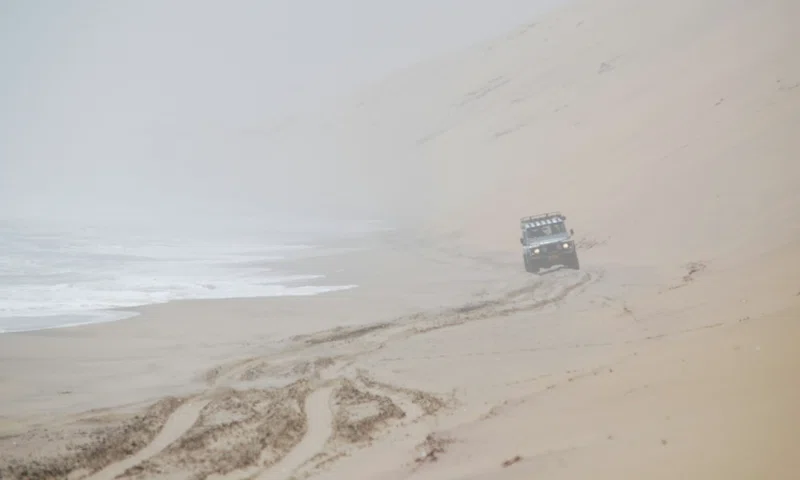
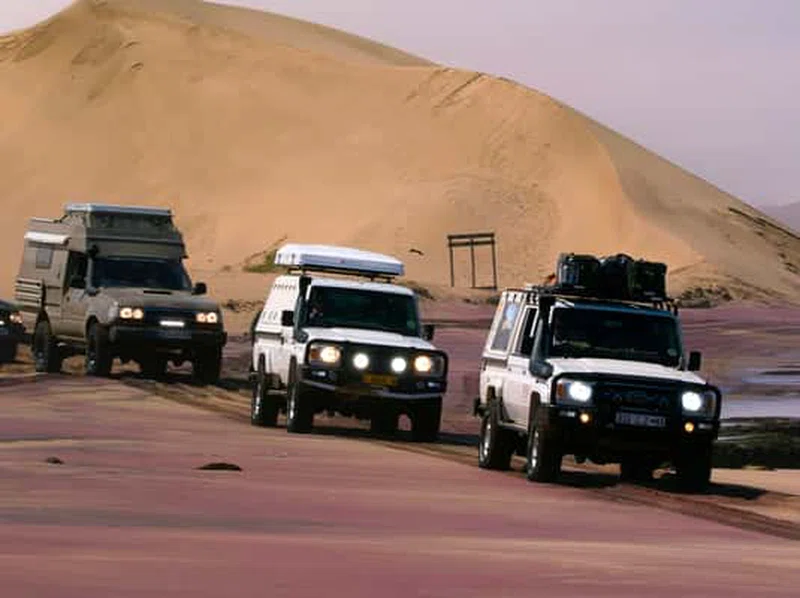
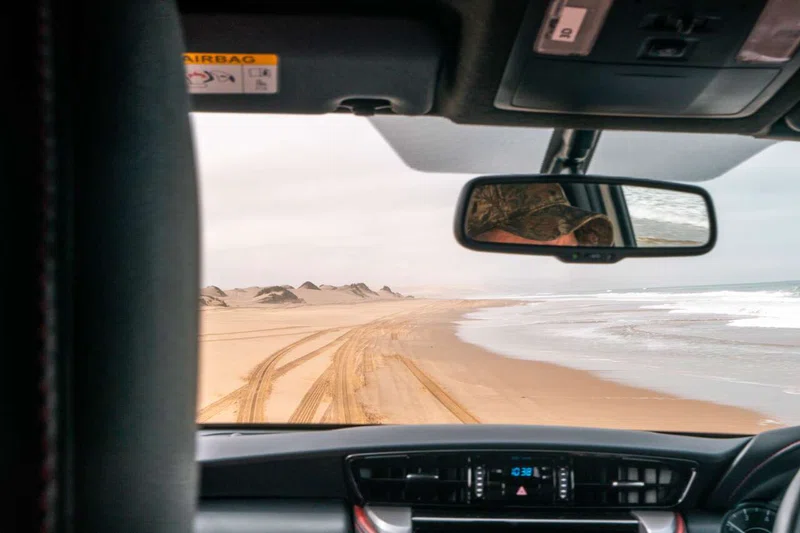
Today, Sandwich Harbour is recognized as a RAMSAR site (Site no. 743), highlighting its significance as one of Southern Africa's most important coastal wetlands. It is a haven for birdlife, with the lagoon hosting a huge colony of up to 200,000 birds, including terns, flamingos, cormorants, and pelicans. The area is also home to about eight endangered animal species. Larger wildlife such as oryx antelopes, springbuck, jackals, ostriches, and brown hyenas can be spotted, along with smaller desert inhabitants like the Dancing White Lady spider, Palmato gecko, Sidewinder, and Golden Mole. Access to Sandwich Harbour is exclusively by 4x4 vehicles, often through guided tours from Walvis Bay or Swakopmund, as there are no public roads and navigation requires expertise due to tides and dune terrain. Activities include thrilling dune driving, bird-watching, seal-watching, and enjoying the dramatic landscapes.
Own this park or reserve?
Claim it to update its details and photos, add what you offer, reply to travellers and promote it on Wapota. It’s free.
Claim this listing →