
Attraction in South Africa
Apartheid Museum
About Apartheid Museum
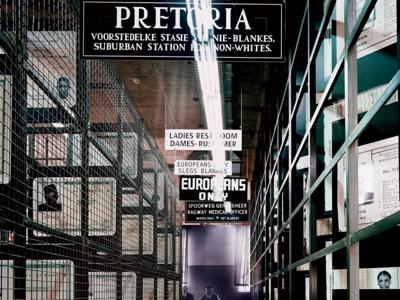
The Apartheid Museum, located in Johannesburg, South Africa, is a significant institution dedicated to illustrating the rise and fall of apartheid and the 20th-century history of the nation. Opened in November 2001, it is widely recognized as the foremost museum globally addressing this critical period in South African history. Situated on a seven-hectare site adjacent to the Gold Reef City complex, the museum's architectural design is a powerful statement in itself, utilizing materials like off-shutter concrete, rusted steel, and dry-stacked stone to evoke the surrounding mining landscape. The building's deliberate design, with its confined circulation and low lighting, aims to create an unsettling atmosphere, immersing visitors in a mild version of the pressure described within the exhibits.
The museum features 22 distinct exhibition areas that guide visitors through a profound emotional journey. Key exhibits include the "Pillars of the Constitution," representing the seven values of South Africa's post-apartheid constitution: Democracy, Equality, Reconciliation, Diversity, Responsibility, Respect, and Freedom. Upon entry, visitors are randomly classified as either "white" or "non-white," directing them through segregated entrances to immediately convey the arbitrary nature of racial division under apartheid. The exhibits incorporate provocative film footage, photographs, text panels, and original artifacts to vividly portray events and personal stories, from the early days of racial classification and segregation to the liberation movements, the 1976 Soweto Uprising, and the eventual democratic elections of 1994. A particularly poignant exhibit, "Political Executions," features 131 nooses, each representing an opponent of the National Party executed under apartheid laws.
The Apartheid Museum serves as a beacon of hope, demonstrating South Africa's commitment to confronting its oppressive past and building a future for all its citizens. It functions as a crucial educational resource, especially for younger generations born after 1994, allowing them to understand the system their parents and grandparents endured. The museum operates as an independent non-profit organization, relying on donations and sponsorships to sustain its operations. It is open from Tuesdays to Sundays, 09:00 to 17:00, and visitors are advised to allocate at least two hours for a comprehensive experience. Due to the graphic nature of its content, the museum is not recommended for children under the age of 11.
Things to see
Close by




Where to stay
Where to eat





Things to do
South Africa Safari

1-Day Pretoria, Soweto and Apartheid Museum Tour
1-Day Cradle of Humankind Tour
Lesedi Cultural Village
Weather through the year
Average temperatures and rainfall by month
Station: 258s278e · 26.5 km away · 1140m