Attraction in Morocco
Casino Militar de Melilla
About Casino Militar de Melilla
The Casino Militar de Melilla is a significant historical building located in the Spanish city of Melilla. Situated within the Modernist Expansion area, it stands prominently in Plaza de España, flanked by the Bank of Spain and the Assembly Palace. This architectural gem is recognized as part of Melilla's historical-artistic complex and holds the designation of a Cultural Interest Asset.
The construction of the Casino Militar began in 1913 with the allocation of its plot. Over the years, several notable architects and engineers contributed to its design and completion. Romón Abenia developed initial projects in 1919, followed by Emilio Alzugaray. José Pinto de la Rosa continued the work, and in 1924, Jorge Palanca y Martínez Fortún envisioned adding another floor and transforming it into a magnificent building in the Second Empire style. Jesús López de Lara y Mayor furthered its construction in 1925, the year General José Sanjurjo inaugurated its ground floor. Luis Sicre contributed projects between 1930 and 1931, and Enrique Nieto designed its distinctive hall, ultimately completing the building in 1934.
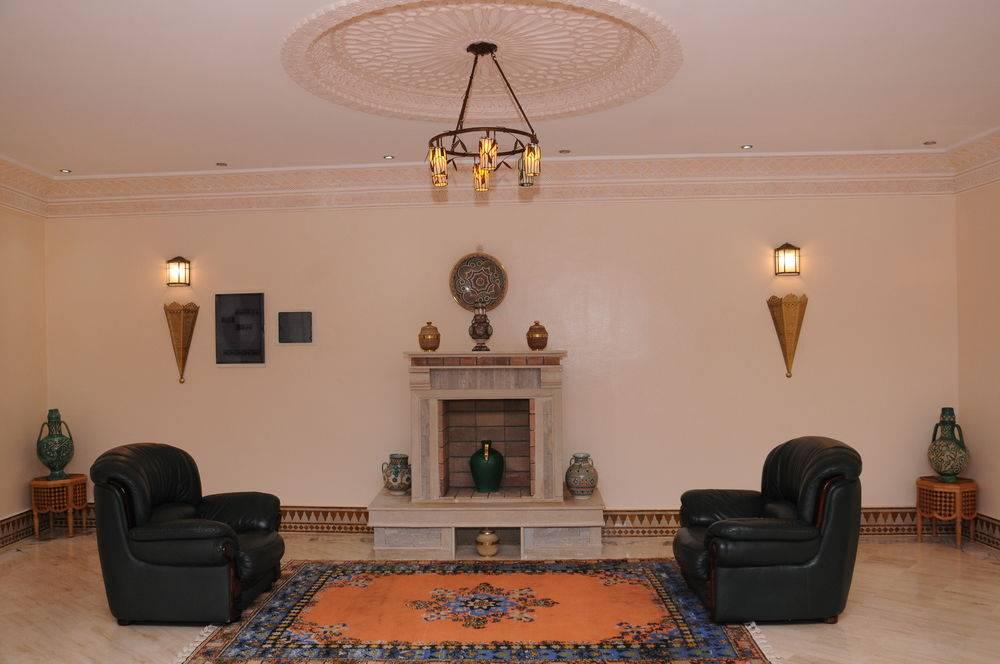
Architecturally, the Casino Militar is a two-story, square-plan structure featuring classicist facades. Its interior is notable for its lower and upper halls, designed in a Neo-Arab style. The building was constructed using local stone masonry and solid brick, incorporating iron beams and brick vaults. A prominent feature is its main facade, adorned with moldings above the lintels—circular on the ground and main floors, and triangular on the first. A central vertical axis defines the entrance, flanked by two Doric columns on each side, leading to a balustraded balcony. This balcony is further flanked by pilasters, which give way to another similarly arranged balcony, culminating in a triangular pediment that displays a shield of the Spanish Republic. In January 2016, the building sustained damage to its pediment and rear cornice during the Alboran Sea earthquake, necessitating the demolition of the parapet and subsequent restoration within the same year. The coordinates 35.292864, -2.937439 align with its location in Melilla, Spain.