
Attraction in Uganda
Entebbe International Airport
About Entebbe International Airport
Entebbe International Airport is Uganda's primary international air travel hub, strategically positioned on a peninsula along the northern shores of Lake Victoria. Often referred to as the “Airport on the Equator” due to its precise geographical coordinates of 00.020 North latitude and 320 East longitude, it sits at an elevation of 1,153 meters (3,782 feet) above sea level. The airport is located approximately 6 kilometers southwest of Entebbe town and about 40 kilometers southwest of Kampala, the nation's capital.
Established by British Colonial authorities, the airport's facilities were significantly expanded and formally reopened in 1951. Its main terminal building, designed by Yugoslav Montenegrin architect Aleksandar Keković, was constructed between 1972 and 1973. Entebbe International Airport gained global recognition in 1976 as the site of Operation Entebbe, a daring hostage rescue mission. The airport also sustained partial damage during the Uganda-Tanzania War in 1979.
Currently, Entebbe International Airport is undergoing a comprehensive multi-phase modernization and expansion program, initiated in 2015 and projected to conclude by 2033. This ambitious project aims to significantly boost its capacity, with an expected increase in annual passenger handling from 2 million to 3.5 million upon completion of the first phase, and ultimately to 6.1 million passengers and 172,000 tonnes of cargo annually by 2033. The airport features two asphalt runways, measuring 3,658 meters and 2,408 meters respectively, capable of accommodating a wide range of aircraft. Passenger amenities include banking services, ATMs, foreign exchange bureaus, diverse restaurants, duty-free shopping, car rental options, medical facilities, and complimentary Wi-Fi access. The airport is operated by the Civil Aviation Authority of Uganda and serves as a key operational base for both Eagle Air and Uganda Airlines.
The airport's unique location on Lake Victoria's peninsula also designates it as a gazetted “Bird Sanctuary,” attracting numerous local and migratory bird species. To ensure aviation safety, a dedicated Bird Hazard and Wildlife Control Unit is in place, balancing environmental conservation with operational security.
Things to see
Close by


Where to stay

Where to eat




Things to do
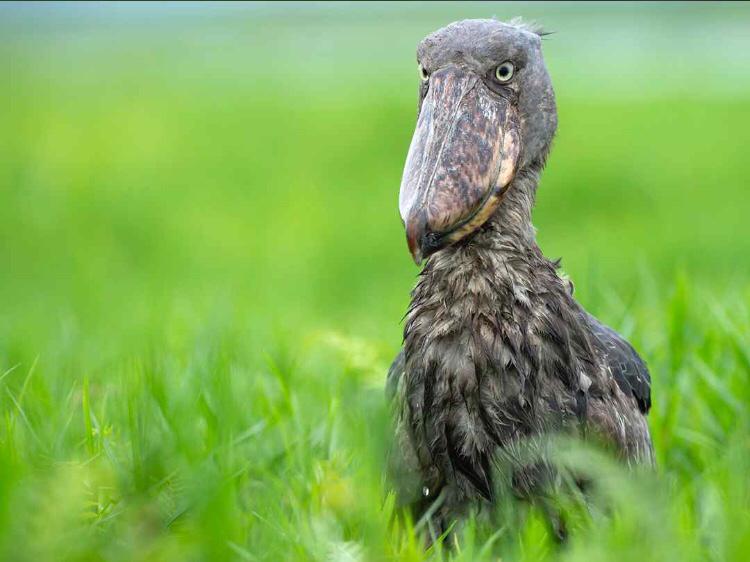
1 Day Mabamba Swamp Birding Tour
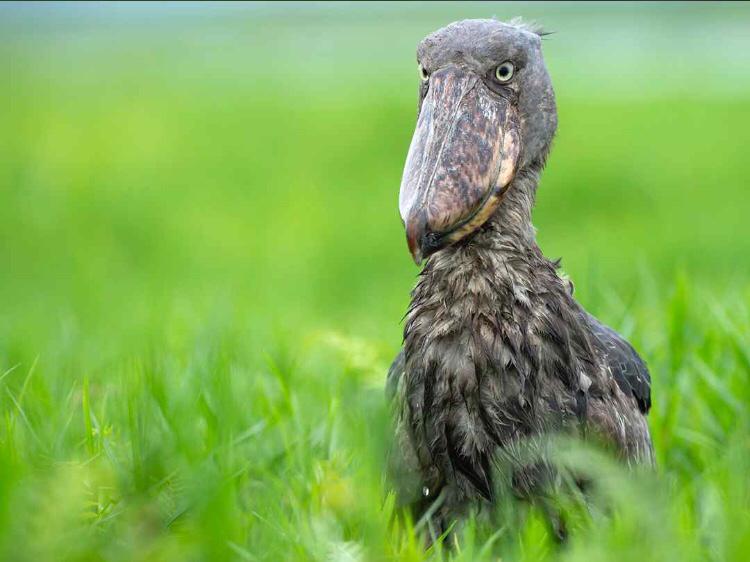
1 Day Mabamba Swamp Birding Tour

11 Days – Birding and Photography Safari

10 Days - The Great Uganda Gorillas & Primates

Solo Travel Safaris in Uganda & East Africa
8-Day Uganda's Birding Paradise Bird Watching Safari
Weather through the year
Average temperatures and rainfall by month
Station: 2n325e · 8.1 km away · 1199m