Attraction in South Africa
Great Karoo
About Great Karoo
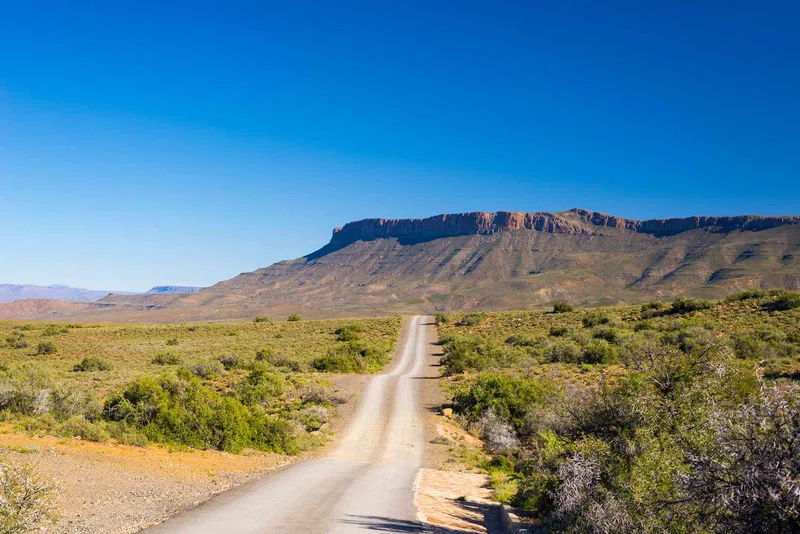
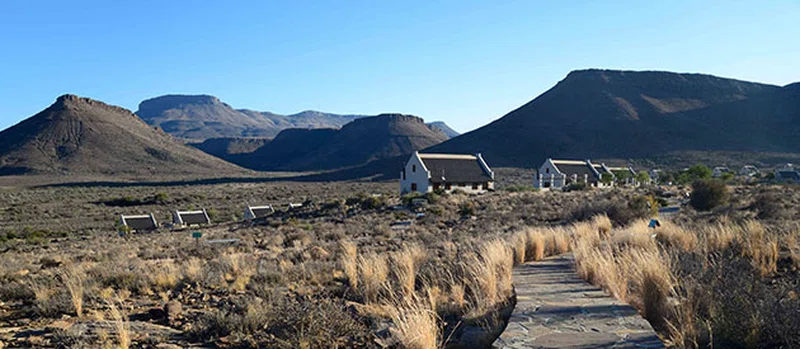
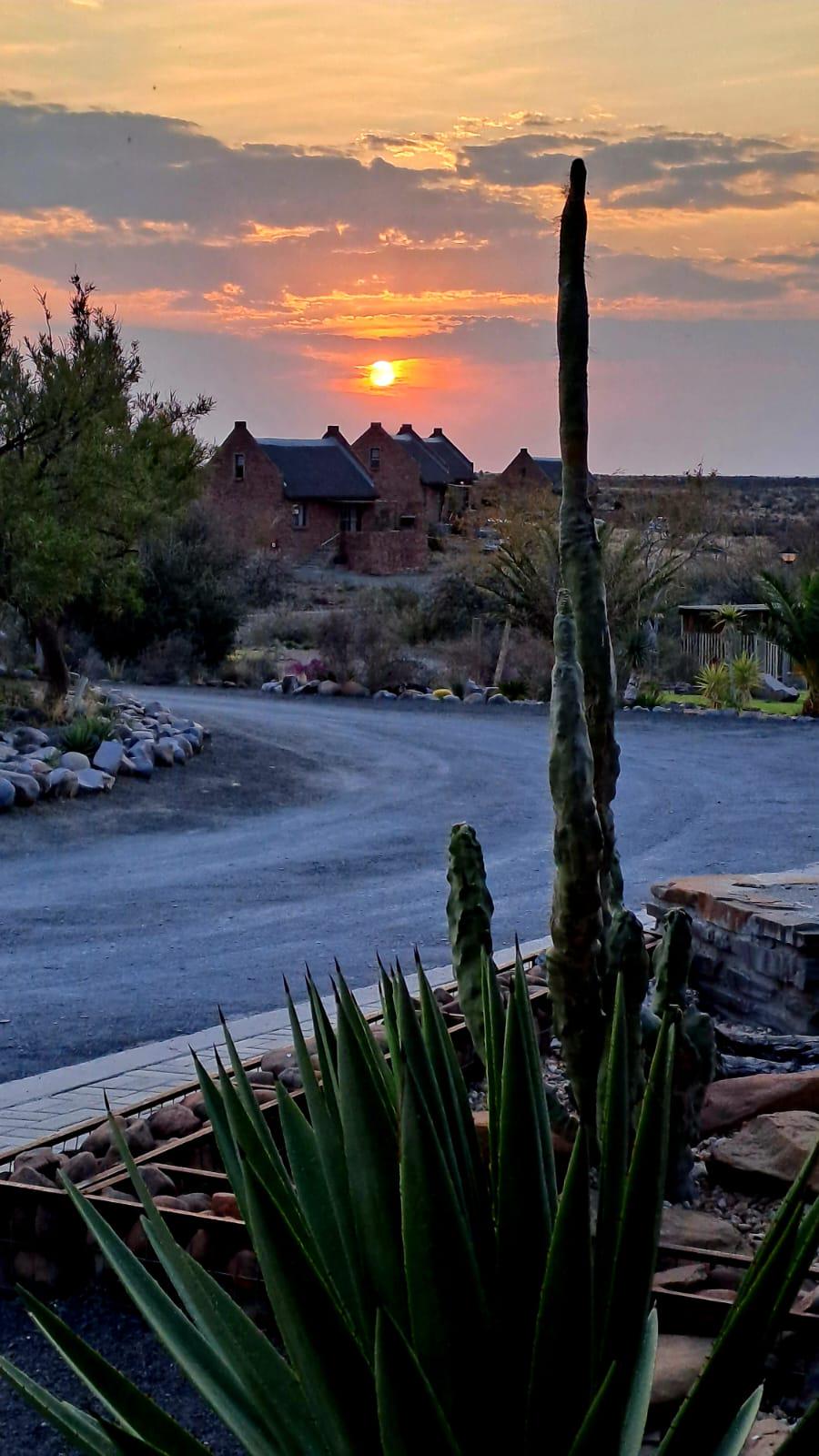
The Great Karoo is an expansive semi-desert and plateau basin located in central South Africa, primarily spanning the Eastern, Northern, and Western Cape provinces. This vast region covers approximately 400,000 square kilometers (150,000 sq mi) and is geographically situated between the Great Escarpment and the Swartberg Mountains. Its landscape is characterized by wide, open plains, rugged mountain ranges such as the Swartberg and Sneeuberg, and distinctive geological formations like the Valley of Desolation. The climate is semi-arid with low annual rainfall, typically ranging from 100–400 mm. The Karoo is broadly divided into the Succulent Karoo Biome and the Nama Karoo Biome, with the latter covering most of the interior at altitudes between 500 and 2000 meters. Iconic flat-topped hills, known as Karoo Koppies, are a common feature in the Upper Karoo, formed by erosion-resistant dolerite sills. The region is also renowned for its exceptionally clear, dark night skies, making it a prime location for stargazing, home to the Southern African Large Telescope (SALT) near Sutherland.
The Great Karoo supports a diverse array of wildlife adapted to its arid conditions, including various antelope species like springbok, gemsbok, and eland, as well as bat-eared foxes, meerkats, tortoises, and over 200 bird species. Conservation efforts in protected areas and private reserves have successfully reintroduced apex predators and keystone species, including the Big 5 (lion, leopard, elephant, buffalo, and black rhino). Visitors can engage in activities such as game viewing, bird watching, hiking in the mountains, and exploring ancient caves like the Cango Caves. The region also encompasses several national parks, including Karoo National Park, Camdeboo National Park, and Tankwa Karoo National Park. Beyond wildlife, the Karoo is a significant area for Merino sheep and Angora goat farming.
Historically, the Great Karoo was inhabited by the Khoisan people, whose presence is evidenced by ancient rock art and historical sites. European settlers arrived in the 18th and 19th centuries, establishing towns such as Beaufort West and Graaff-Reinet. The region is globally recognized for its rich fossil record, particularly the Karoo Supergroup, which offers crucial insights into prehistoric life and the evolution of mammal-like reptiles over 300 million years. The introduction of windpumps in the late 1800s played a pivotal role in enabling permanent human settlements and extensive sheep farming across the vast plains. The area also holds historical significance from the Second Anglo-Boer War, with remnants of blockhouses still visible. Graaff-Reinet stands out as a cultural hub, boasting over 220 listed national monuments.