Attraction in Ethiopia
Hayk Estifanos Monastery
About Hayk Estifanos Monastery
Hayk Estifanos Monastery is a historically significant religious site situated on a peninsula in Lake Hayq, located north of Dessie in Ethiopia's Amhara Region. The monastery's origins trace back to the 10th century when it was established as a church during the reign of Emperor Dil Na'od by the Egyptian archbishop Aba Selama. It later transitioned into a monastery in the 13th century, becoming a renowned center for monastic learning under the guidance of Saint Iyasus Mo'a. Iyasus Mo'a also played a crucial role in the restoration of the Solomonic dynasty. A notable student of his, Tekle Haymanot, went on to found the prominent Debre Libanos monastery. The site has endured historical challenges, including being looted and burned by Imam Ahmad ibn Ibrahim al-Ghazi in 1531.
The monastery houses a museum that preserves a collection of invaluable antiquities, including holy articles, parchment manuscripts, and items donated by various emperors, some dating back to the 13th century. Among its treasures are over 140 unique parchment books, intricately adorned with paintings of saints and prophets. The museum also displays ancient pulpits, five crowns gifted by Ethiopian emperors, and crosses reflecting Axumite, Lalibela, and Gondarian styles. Other artifacts include a sacrificing stone, a millstone, a large cooking pot, and icons. Within the monastery grounds, visitors can find old structures like the Tegbar bet, a historic kitchen house, and a timber house used as a burial place for dignitaries, alongside a stone bell that traditionally served as an alarm for monks.
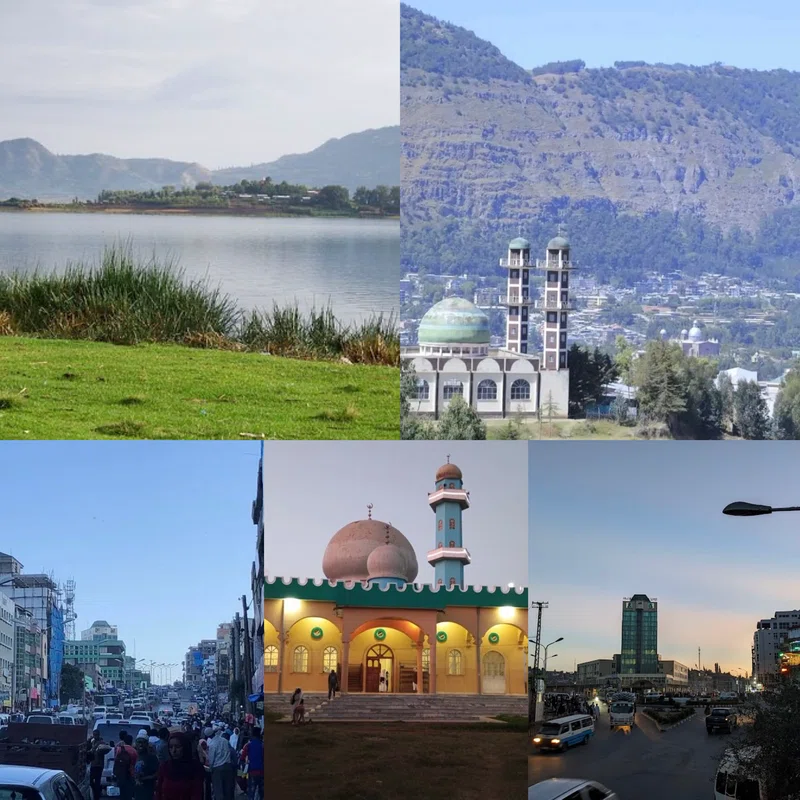
The monastery's location on a peninsula in Lake Hayq offers a serene and picturesque setting, with birds frequenting the waters and local fishermen. Lake Hayq itself is a freshwater body, approximately 6.7 kilometers long and 6 kilometers wide, with a maximum depth of 88 meters. Historically, the monastery was on an island, but a retreat of the lake's waters in 1976 transformed it into a peninsula. While the monastery is accessible on foot from the nearby town, it maintains a tradition where women are not permitted to enter the main monastic area, though they can visit the nearby Margebeta Giorgis nunnery.