Attraction in Morocco
House of the Acrobat
About House of the Acrobat
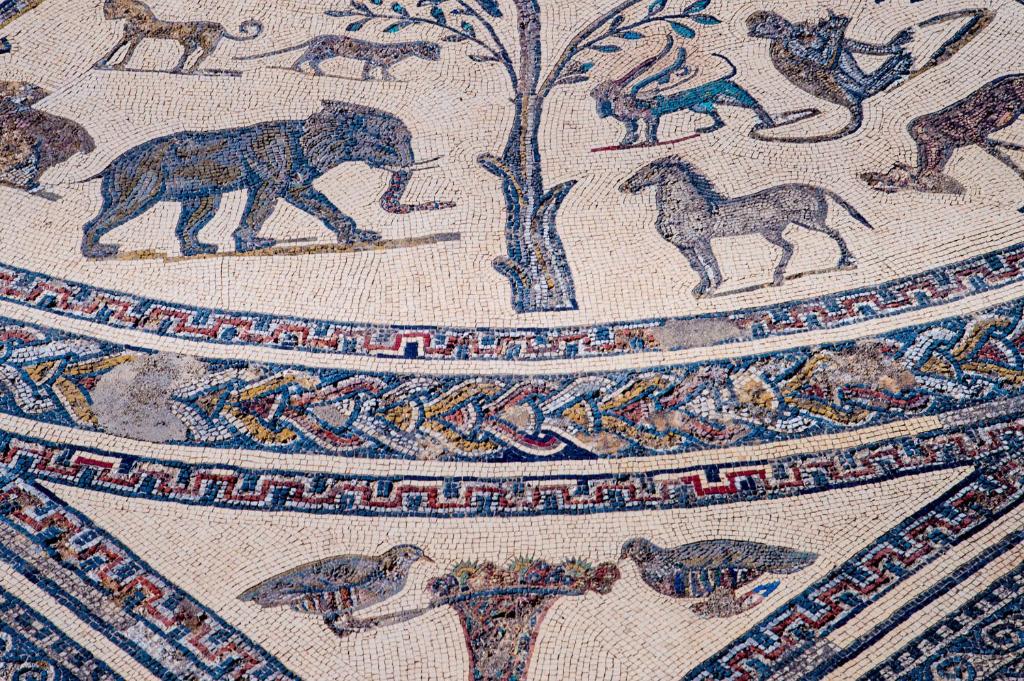
The House of the Acrobat is a notable structure located within the ancient Roman city of Volubilis, an archaeological site in Morocco. This house is particularly recognized for its distinctive mosaic, which portrays an athlete or acrobat. The mosaic depicts this figure riding a donkey backward while holding a cup, possibly representing Silenus.
Volubilis itself is a partly excavated Amazigh-Roman city situated near Meknes, Morocco, with coordinates approximately 34.07111°N 5.55361°W. It developed from the 3rd century BC as an Amazigh and then proto-Carthaginian settlement, eventually becoming the capital of the Kingdom of Mauretania. Under Roman rule from the 1st century AD, the city expanded significantly, covering about 42 hectares and featuring major public buildings like a basilica, temple, and triumphal arch. Its prosperity was largely driven by olive growing, leading to the construction of many elaborate town-houses adorned with large mosaic floors.
The city fell to local tribes around 285 AD and was never re-taken by Rome due to its remote location. However, it remained inhabited for centuries, first as a Latinized Christian community and later as an early Islamic settlement. In the late 8th century, Volubilis briefly served as the seat of Idris ibn Abdallah, the founder of the Idrisid dynasty of Morocco. Today, Volubilis is a UNESCO World Heritage Site, celebrated as an exceptionally well-preserved example of a large Roman colonial town on the fringes of the Empire. The House of the Acrobat is one of many private residences within this historical site that showcase the rich artistic and architectural heritage of the ancient city.