
Attraction in Namibia
Kavango East and Kavango West Regions
About Kavango East and Kavango West Regions
The Kavango Region, now administratively divided into Kavango East and Kavango West since 2013, is a significant geographic area in northeastern Namibia. It is characterized by its lush, water-rich landscape, a stark contrast to much of arid Namibia, primarily due to the perennial Okavango River. This majestic river, originating in the Angolan highlands, forms a natural border with Angola for over 400 kilometers before flowing eastward and eventually draining into Botswana's Okavango Delta, making it unique as the only perennial river in Africa that does not reach the ocean. The region generally lies at an elevation of about 1,100 meters (3,600 feet) and receives a relatively high annual rainfall of 500-600 mm (20-24 inches).
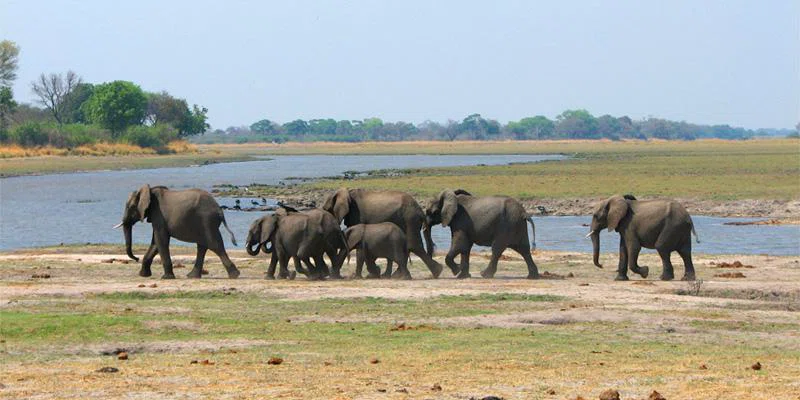
The Kavango landscape features impressive woodlands, including Rhodesian teak, mahogany, and mopane forests, especially in the east, alongside patches of tall grass and bush scrub. This environment supports abundant wildlife, particularly within its national parks and along the Okavango River. Notable protected areas include Khaudum National Park, Mahango Game Reserve, Buffalo Park, Mangetti National Park, and Bwabwata National Park, all of which are part of the vast Kavango-Zambezi (KAZA) Transfrontier Conservation Area, the world's largest conservation area. These parks are home to a diverse array of big-game species such as elephants, buffalo, zebra, giraffe, roan antelope, impala, sable, and rare species like red lechwe, tsessebe, and sitatunga. Predators like lions, leopards, cheetahs, and African wild dogs are also present. The rivers teem with crocodiles, hippos, and various fish species, including the popular tigerfish, making it a prime destination for fishing and birdwatching, with over 400 bird species recorded.
The Kavango people, who migrated from the Great Lakes region of East Africa between 1750 and 1800, are the main inhabitants, divided into five or six distinct tribes, each led by a traditional chief. Their livelihoods are closely tied to the river, engaging in subsistence fishing, cattle rearing, and the cultivation of crops like sorghum, millet, and maize on the fertile floodplains. Rundu, the capital of Kavango East and the second-largest town in Namibia, serves as the administrative and economic hub. The region is also known for its skilled woodcarvers, whose ancient craft is a flourishing industry. Cultural experiences, such as visiting the Mbunza Living Museum, offer insights into the pre-colonial traditions of the Vambunza people. Despite its natural wealth and agricultural potential, the Kavango Region has historically faced high poverty levels.
Things to see
Close by
Weather through the year
Average temperatures and rainfall by month
Station: 183s184e · 26.6 km away · 1157m