

Khayrbek Complex
The Khayrbek Complex, also known as the Amir Khayrbak Funerary Complex, is a significant Islamic religious and funerary complex situated on Bab al-Wazir street within the historic Darb al-Ahmar district of Islamic Cairo, Egypt. Its coordinates are approximately 30.0355°N 31.2604°E. The complex was originally established in 1502/1503 CE with a mausoleum by Prince Khayer-Bek, who later became the first Ottoman governor of Egypt after betraying Sultan Al-Ghuri. In 1519/1520 CE, a madrasa (school) and a mosque were added, and the adjacent Amir Alin Aq Palace was incorporated as his residence. Architecturally, the complex largely follows the Mamluk tradition, despite straddling the Mamluk and Ottoman periods.
The complex comprises a madrasa, a mausoleum, and a sabil (public fountain) with associated structures. The main entrance of the madrasa is located near the sabil, facing Bab Al Wazir. The madrasa features a rectangular vestibule leading to a central hall with two iwans (vaulted halls) on each side. A curved mihrab (prayer niche) is centrally located on the qibla wall, and a door from the southwestern iwan leads to the mausoleum, which also contains a curved mihrab and a marble slab marking Khayer-Bek's tomb. The sabil, positioned to the left of the main entrance, is characterized by three windows and an Ottoman structure above it. The dome of the mausoleum is adorned with a repetitive arabesque pattern of interlacing leaves and hearts, a simplified version of the intricate designs found on Sultan Qaytbay's tomb. Its brick shaft features a geometric star-shaped stucco design, and its threshold incorporates a stone block with hieroglyphic inscriptions from a pharaonic building.
The Khayrbek Complex has been a focal point of extensive conservation and restoration efforts, particularly by the Aga Khan Trust for Culture (AKTC). Restoration work on the complex began around 2000, with the reconstruction of the minaret's missing upper section completed in 2003-2004. The broader restoration of the entire complex concluded by the end of 2006. These efforts are part of a larger urban renewal initiative in the Darb al-Ahmar district, which also includes the creation of Al-Azhar Park and various socioeconomic programs. The complex's restoration aimed not only to preserve its architectural integrity but also to revive traditional craftsmanship.
Quick Info
Own this place?
Claim it to update its details and photos, add what you offer, reply to travellers and promote it on Wapota. It’s free.
Claim this listing →


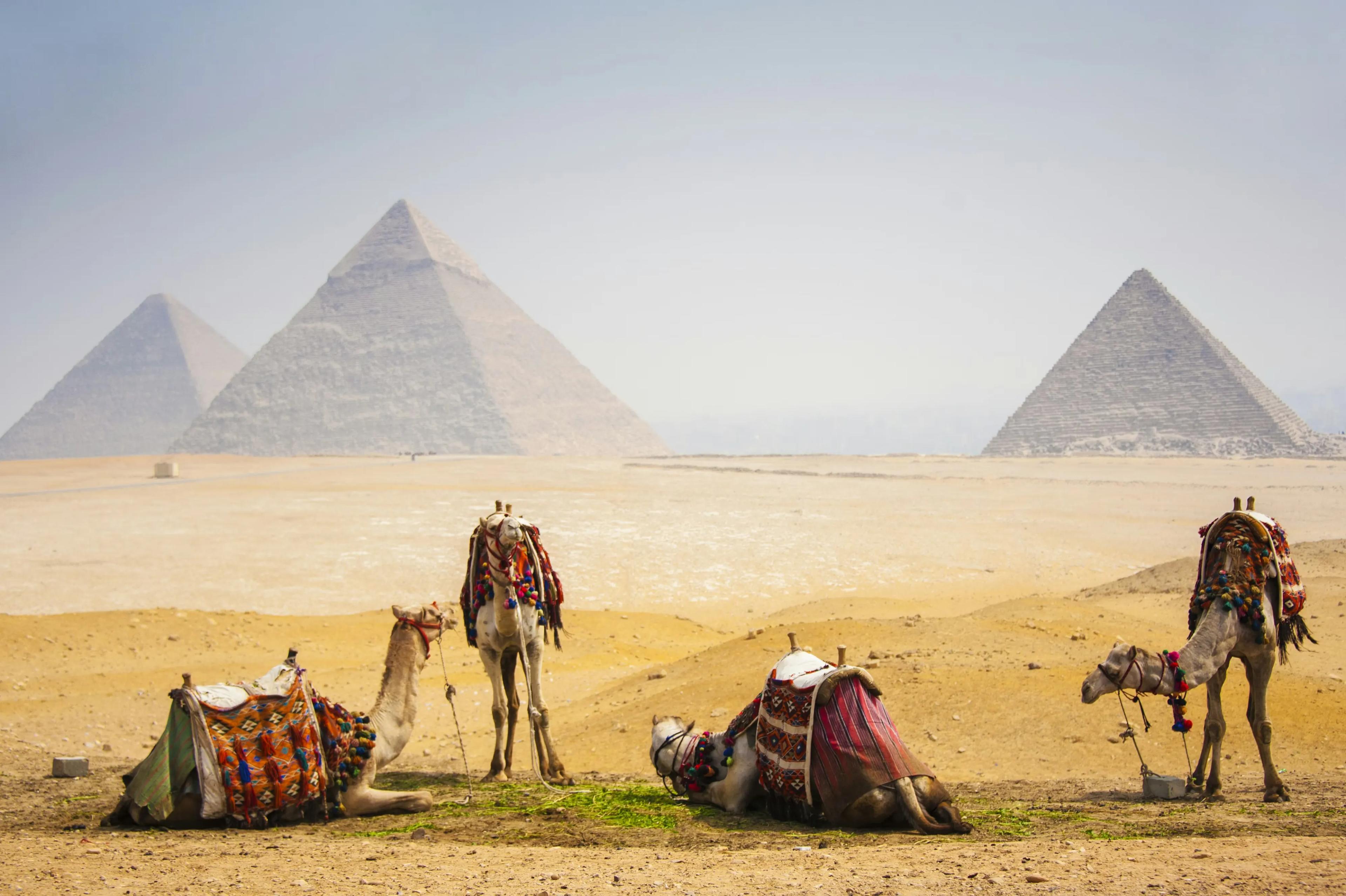
Classic Egypt: Pyramids, Nile Cruise & Luxor’s Legends
0.0 km away
Weather & Rainfall Patterns
Station: 298n312e · 23.4 km away · 26m