
Attraction in Botswana
Nxai Pan National Park
About Nxai Pan National Park
Nxai Pan National Park is a significant natural reserve located in northeastern Botswana, forming part of the expansive Makgadikgadi complex. Covering an area of 2,100 square kilometers, the park is characterized by large salt pans, including Nxai Pan, Kgama-Kgama Pan, and Kudiakam Pan, which are remnants of an ancient prehistoric lake. These pans are now covered in grass and dotted with acacia trees, creating a landscape that some compare to Tanzania's Serengeti. The park was initially established as a game reserve in 1970, encompassing 1676 square kilometers, and later expanded in 1992 to 2578 square kilometers to include the Kudiakam Pan and the famous Baines' Baobabs, at which point it was granted National Park status.
The park's unique environment supports a diverse array of wildlife, particularly during and after the rainy season, which typically runs from December to April. During this period, the pans fill with water, transforming into lush grasslands that attract thousands of migrating zebra and wildebeest, along with gemsbok, eland, and red hartebeest. This spectacle of migration is a major highlight, with many animals giving birth during these months. Permanent residents include lions, giraffes, kudus, jackals, springboks, impalas, and bat-eared foxes. Elephants and buffalo are also sighted, often drawn to the park's artificial watering points. The park lies on a migration route for large animal herds moving between the Okavango Delta, Hwange National Park in Zimbabwe, and the Makgadikgadi grasslands.
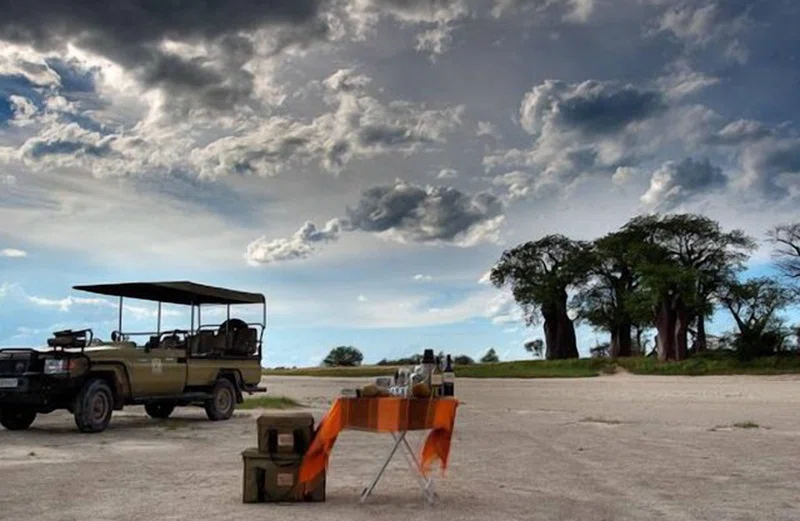
A prominent feature within Nxai Pan National Park is the cluster of seven ancient baobab trees known as Baines' Baobabs, located on the edge of the Kudiakam Pan. These majestic trees, estimated to be around 1,000 years old and over 20 meters tall, were famously painted by explorer Thomas Baines in 1862, solidifying their place in history. The park's name, 'Nxai', is derived from a San word for a curved stick used to dig for springhares, reflecting the area's historical connection to the San (Bushmen) people. Access to the park, situated about 50 kilometers from the Nata-Maun Road, requires a 4x4 vehicle due to sandy roads, and visitors must be self-sufficient as there are no fuel stations or restaurants within the park.
Things to see
Close by

Where to stay
Things to do

Picnic Lunch in Nxai Pan
Boat Trip on the Boteti River (Seasonal)
Fishing Excursion on Boteti River (Optional)
Picnic Lunch in the Pans
Quad Biking on the Pans
Sundowners on the Pans
Weather through the year
Average temperatures and rainfall by month
Station: 198s250e · 24.4 km away · 968m