Attraction in Egypt
Pyramid of Menkaure
About Pyramid of Menkaure
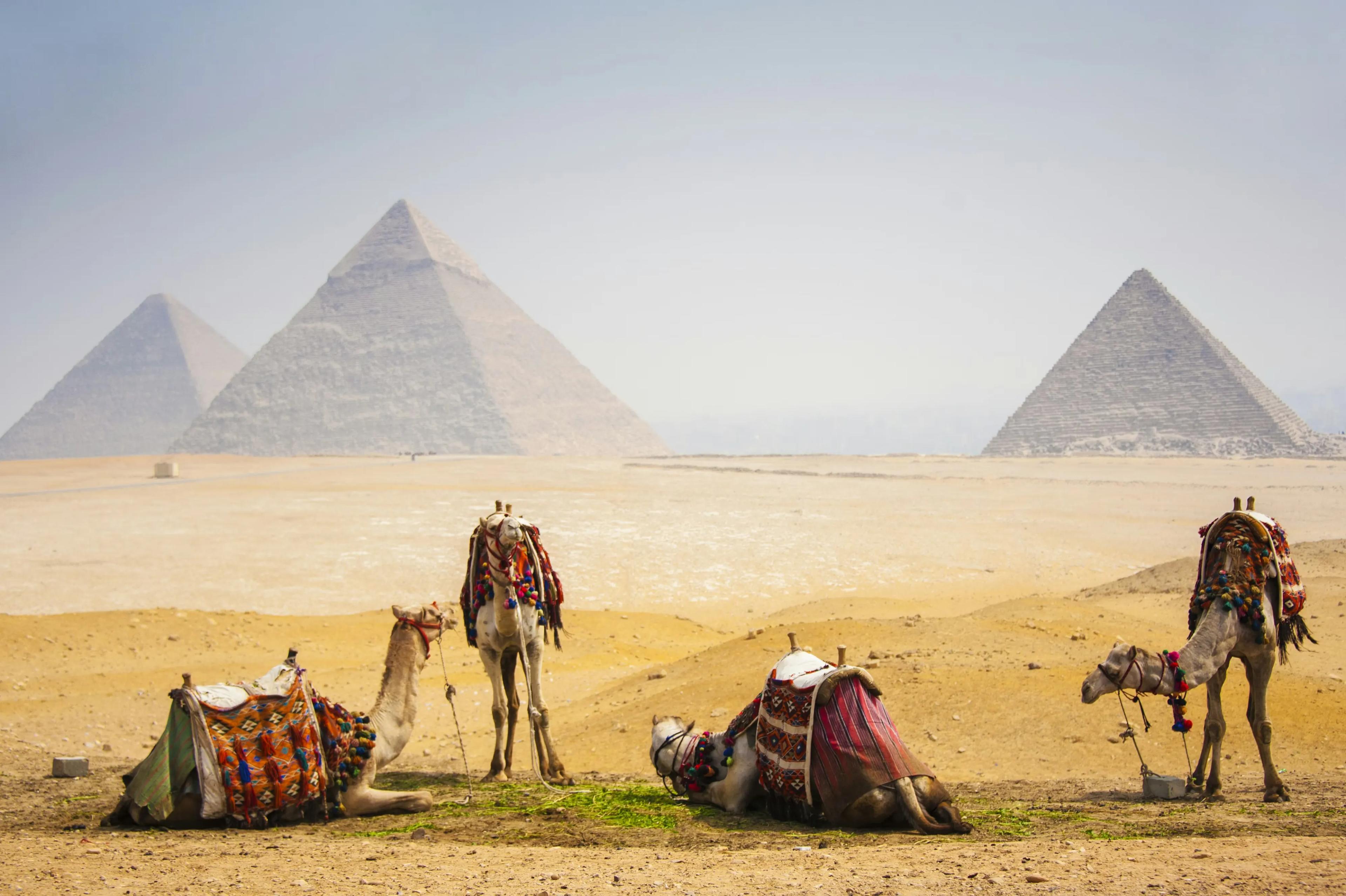
The Pyramid of Menkaure, also known as Mykerinos, is the smallest of the three iconic pyramids situated on the Giza Plateau in the southwestern outskirts of Cairo, Egypt. Constructed for Pharaoh Menkaure, who ruled during the Fourth Dynasty (approximately 2532–2503 BC), it stands as a significant testament to ancient Egyptian architectural and engineering prowess. Originally reaching a height of 65 meters (215 feet), its current height is about 61 meters (200 feet) with a base measuring 108.5 meters (356 feet).
The pyramid's core was built from local limestone, but its distinctive feature is the lower sixteen courses of its exterior casing, which were made of red granite transported from Aswan, over 800 kilometers away. The upper sections were intended to be cased in fine white limestone. However, Menkaure died before the complex was fully completed, leaving some granite blocks unfinished and the mortuary and valley temples completed with whitewashed mud brick instead of the originally planned granite-encased limestone.
The complex includes a mortuary temple, a valley temple, and three smaller satellite pyramids to the south, believed to be for his queens. The interior features a descending passage from the northern face, leading to an antechamber with carved decorative panels, a portcullis chamber, and a granite-lined burial chamber. Although a basalt sarcophagus was discovered within, it was tragically lost at sea in 1838 during its transport to England. The pyramid bears a notable vertical gash on its northern face, a lasting mark from a failed demolition attempt by Sultan Al-Aziz Uthman in 1196.