Attraction in Namibia
Twyfelfontein
About Twyfelfontein
Twyfelfontein, officially known as ǀUi-ǁAis, is a significant archaeological site located in the Kunene Region of north-western Namibia, within the area historically referred to as Damaraland. Its name, meaning "uncertain spring" or "doubtful spring" in Afrikaans, refers to a natural spring that sustained life in this otherwise arid valley, flanked by sandstone table mountains. The site is renowned globally as Namibia's first UNESCO World Heritage Site, designated in 2007, due to its exceptional concentration of ancient rock engravings.
The valley has been continuously inhabited for approximately 6,000 years, first by Stone-age hunter-gatherers of the Wilton culture and later by Khoikhoi herders. Both groups utilized the area for worship and shamanistic rituals, leaving behind an extensive collection of over 5,000 petroglyphs and some rock paintings. These artworks, created by chiseling through the dark desert varnish on sandstone, depict a wide array of animals such as rhinoceroses, elephants, ostriches, and giraffes, alongside human and animal footprints. Remarkably, some engravings feature marine animals like seals and penguins, suggesting the ancient inhabitants traveled to the distant coast.
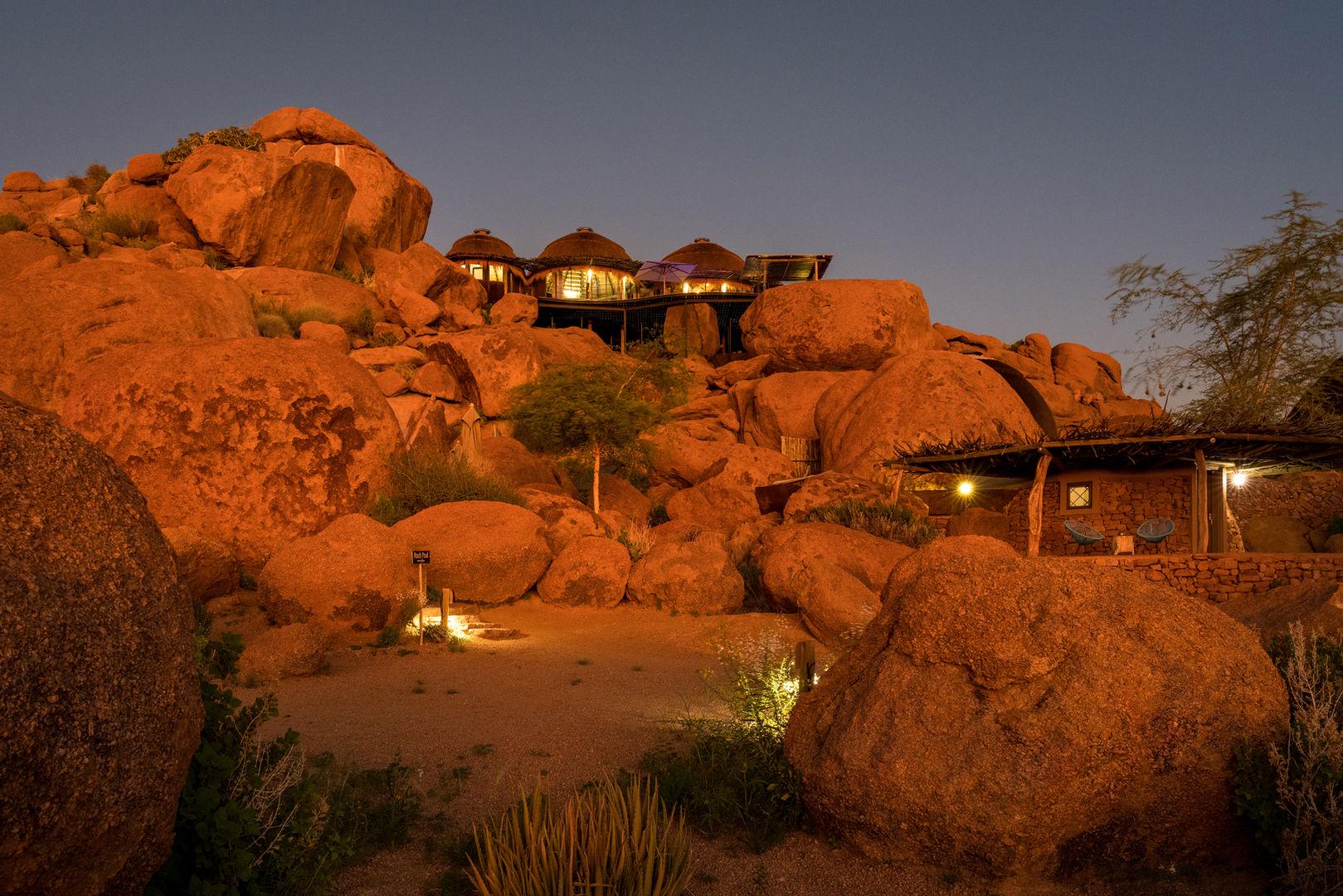
Beyond the rock art, the broader Twyfelfontein area offers diverse natural attractions. These include unique geological formations like Burnt Mountain, known for its distinctive colors, and the Organ Pipes, characterized by perpendicular dolerite pillars formed by volcanic activity. The landscape is a transitional zone of semi-desert, savanna, and shrubland, home to desert-adapted wildlife, including the elusive desert elephants. Visitors to Twyfelfontein are required to explore the rock art sites with a local guide, ensuring the preservation of this invaluable cultural heritage.