

Brandberg Mountain
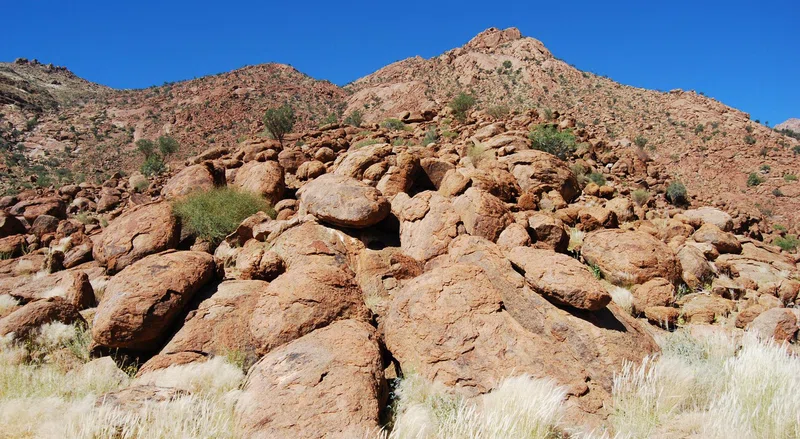
Brandberg Mountain, also known as Dâures in Damara, is Namibia's highest mountain, located in the Erongo region of the northwestern Namib Desert, approximately 90 kilometers from the Atlantic Ocean. This impressive granite massif covers an area of about 650 to 760 square kilometers and rises dramatically by some 2,000 meters above the surrounding flat gravel plains. Its highest peak, Königstein, reaches an elevation of 2,573 meters (8,442 feet) above sea level. The mountain derives its name, meaning "Burning Mountain" in German and Afrikaans, from the glowing scarlet color it takes on during sunrise and sunset. Geologically, Brandberg is a dome-shaped granitic intrusion formed during the Early Cretaceous rifting that led to the separation of South America and Africa, a remnant of the ancient supercontinent Gondwana.Despite its arid environment, with summer temperatures often exceeding 40°C, Brandberg Mountain supports a unique and diverse ecosystem. The mountain's elevation draws more rainfall than the surrounding desert, and this water seeps into deep crevices, feeding springs that sustain distinct plant and animal communities. The area is home to a variety of desert-adapted wildlife, including elusive desert-dwelling elephants and rare black rhinos, though their populations are small. It also boasts the richest scorpion fauna in southern Africa and is the discovery site of the insect taxon Mantophasmatodea. Notable flora includes grotesque aloes and euphorbias, with some species endemic to the Brandberg itself.Brandberg is renowned globally for its extensive collection of prehistoric rock art, making it a spiritual site of immense significance to the San (Bushman) tribes. The Tsisab Ravine, at the foot of the mountain, is a major attraction, containing over 1,000 rock shelters and more than 45,000 rock paintings, some dating back 2,000 to 4,000 years. The most famous of these is "The White Lady," a 45 cm high painting initially interpreted as a warrior or shaman. Visitors can hike to these sites, often requiring a local guide to protect the fragile artworks. The higher elevations of the mountain also hold hundreds of additional paintings, painstakingly documented by Harald Pager, whose work revealed Brandberg as one of the world's largest open-air art galleries. The core area of 450 square kilometers was declared a National Monument in 1951.
Quick Info
Own this place?
Claim it to manage photos, respond to visitors, and promote it to travelers.
Claim this listing →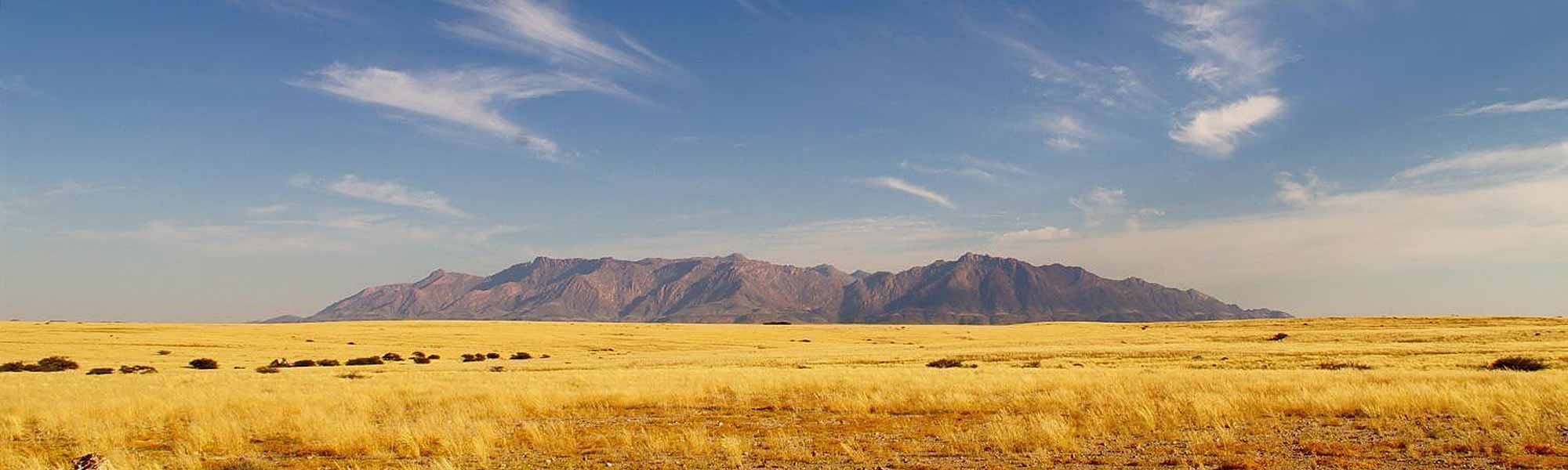



Weather & Rainfall Patterns
Station: 208s144e · 17.2 km away · 610m