
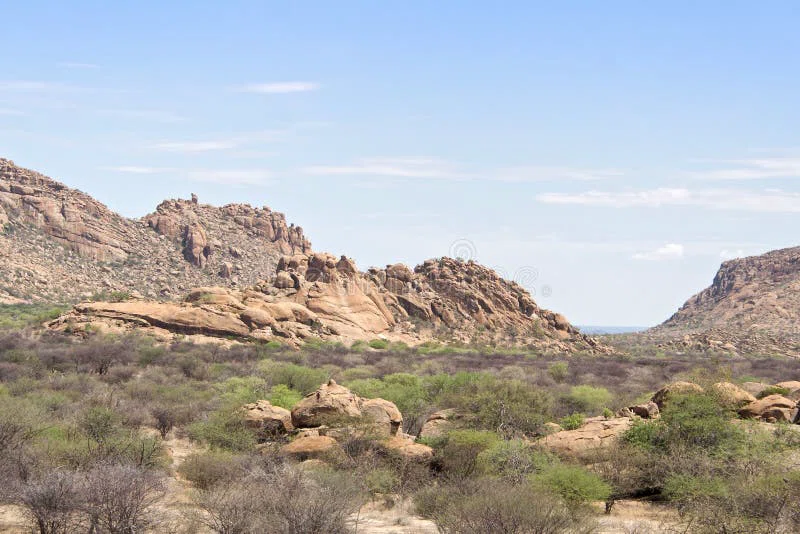
Erongo Mountains
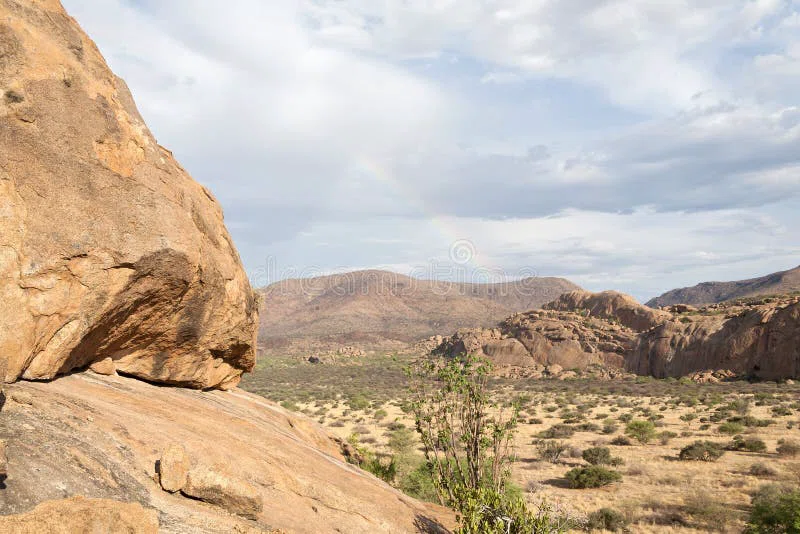
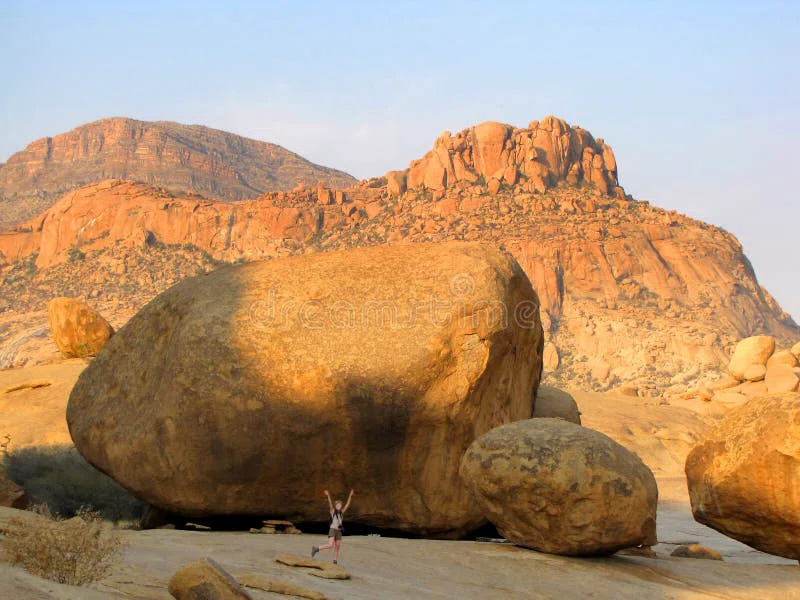
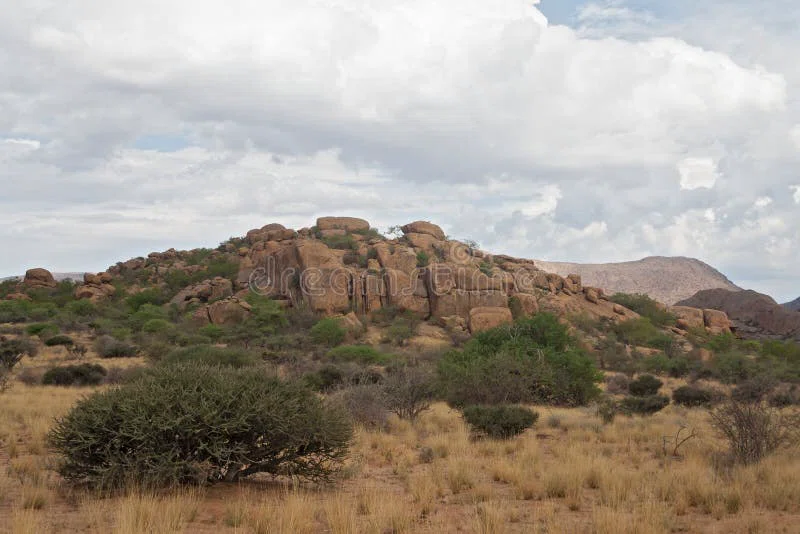
The Erongo Mountains are a prominent granitic mountain range located in central-western Namibia, situated a few hours' drive north of Windhoek and northeast of Swakopmund. This geological marvel is the remnant of an extinct volcano, which erupted approximately 130 to 150 million years ago during the breakup of the Gondwana supercontinent. The volcano, with a diameter of 40 kilometers, collapsed into its magma chamber, leading to the formation of a hard granite-like core that has resisted erosion over millions of years. The landscape is characterized by breathtaking rock formations, massive granite boulders, and dramatic domes, with the highest peak, Mount Erongo, reaching 2,350 meters, and Hohenstein at 2,310 meters. The region is also known for its interesting mineral deposits, including aquamarine, topaz, and fluorite.Despite its arid surroundings, the Erongo Mountains support a diverse array of flora and fauna due to the presence of open water sources within its rugged terrain. The area is a haven for wildlife, including various antelopes such as kudu, oryx, klipspringers, black-faced impala, blesbok, waterbuck, greater kudu, gemsbok, eland, and springbok. Other notable mammals include mountain zebras, giraffes, baboons, leopards, cheetahs, and African elephants. Critically, black rhinos have been reintroduced into the Erongo Rhino Sanctuary, a significant conservation effort within the region. Birdwatchers will find the Erongo Mountains particularly rewarding, with over 200 bird species recorded, including near-endemics like the Damara rockrunner, rosy-faced lovebird, white-tailed shrike, and Ruppell's parrot. The area is also the only known habitat for the dung beetle species Versicorpus erongoensis.The Erongo Mountains hold significant historical and cultural importance. The San people, who inhabited these rocky hills for millennia, left behind numerous rock paintings dating back between 2,000 and 4,000 years, many of which are still visible today. Archaeological investigations, particularly at sites like Omandumba, have uncovered artifacts from the Early Stone Age (300,000-500,000 years ago) attributed to Homo erectus, and richer findings from the Middle Stone Age (250,000-30,000 years ago) linked to Homo sapiens. The "torchbearer cave" is a particularly important rock painting site, featuring over 170 individual motifs. Visitors can explore the area through numerous walking trails and guided excursions, offering a chance to experience the unique geology, observe wildlife, and delve into the ancient history preserved in the rock art.
Quick Info
Own this place?
Claim it to manage photos, respond to visitors, and promote it to travelers.
Claim this listing →




Weather & Rainfall Patterns
Station: 214s153e · 25.3 km away · 1032m