
Vredefort Dome
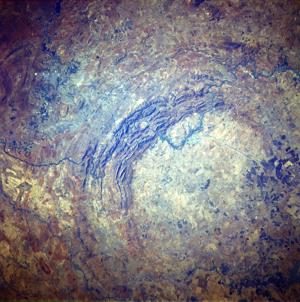
The Vredefort Dome, located approximately 120 km southwest of Johannesburg, South Africa, is the eroded remnant of the world's largest and oldest known meteorite impact structure, dating back 2.023 billion years. The original crater is estimated to have been up to 300 km in diameter, stretching from Johannesburg to Welkom. The visible Vredefort Dome, which is the central uplift of the impact structure, measures about 70-120 km in diameter. This geological marvel straddles the North West and Free State Provinces, with its core World Heritage Site covering approximately 30,111 hectares. The "Dome" itself is a massive granite plug that filled the hole left by the asteroid, with the impact having thrown up deep-lying strata of the Witwatersrand system, forming the mountainous Dome Bergland in the northwest. Key geological evidence of the impact includes pseudotachylite, a form of melted rock, and distinctive shatter cones.The Vaal River meanders through the Vredefort Dome region, its flow disturbed by the turbulent topography, creating numerous rapids and islands. This area is rich in biodiversity, supporting remarkable animal and plant populations. Visitors can engage in a variety of outdoor activities, including white-water rafting, kayaking, fishing, hiking, mountain biking, horse trails, quad biking, abseiling, game drives, hot air ballooning, and bird watching. Guided geological and Dome tours are highly recommended to fully appreciate the scientific and scenic value of the site.Declared a UNESCO World Heritage Site in 2005, the Vredefort Dome is recognized for its outstanding universal scientific value as the oldest, largest, and most deeply eroded complex meteorite impact structure on Earth. It offers crucial insights into Earth's geological history and the evolution of the planet. Some scientists believe the impact may have played a significant role in the evolution of life on Earth. Furthermore, the impact brought gold to the surface, influencing South Africa's historical development. The area also holds cultural significance for local communities, with evidence of SeSotho/SeTswana-speaking farmers dating back to the 1500s-1700s.
Quick Info
Own this place?
Claim it to manage photos, respond to visitors, and promote it to travelers.
Claim this listing →



Weather & Rainfall Patterns
Station: 270s275e · 0.3 km away · 1464m