



Birchenough Bridge
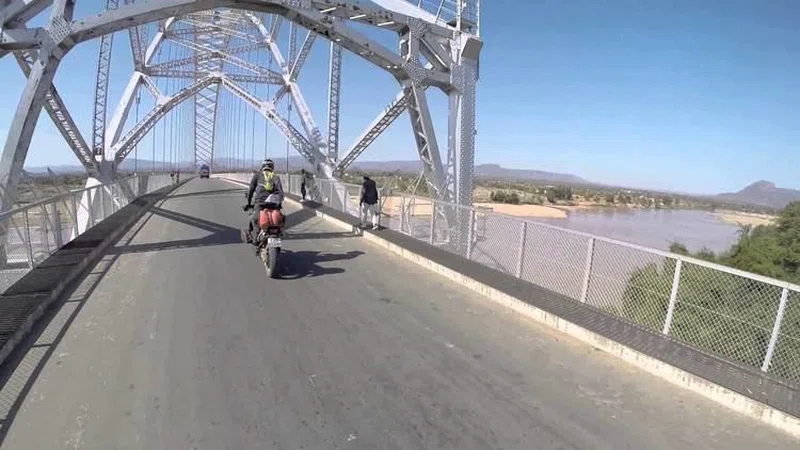
Birchenough Bridge is a prominent engineering marvel and a significant landmark in Zimbabwe, situated in the Manicaland province. It spans the Save River (formerly Sabi River) and is located approximately 62 kilometers from Chipinge and 118 kilometers from Mutare. The bridge forms a vital part of the A9 highway, connecting Masvingo to Mutare, and has fostered the growth of a village around it, which now serves as a hub for small-scale farming activities.Completed in 1935, the construction of Birchenough Bridge was financed by the Beit Trust, then chaired by Sir Henry Birchenough, after whom the bridge is named. Its design was the work of Ralph Freeman, the same consulting engineer responsible for the iconic Sydney Harbour Bridge, resulting in a striking architectural resemblance between the two structures. Upon its completion, with a main arch span of 1,080 feet (329 meters), it held the distinction of being the third-longest single-arch bridge globally, trailing only the Sydney Harbour Bridge and the Bayonne Bridge in New York. The bridge's total length extends to 1,240 feet (378.2 meters), with its impressive arch rising 280 feet above the river. Dorman Long and Company undertook the construction, employing 1,500 tons of "Chromador" steel, a high-tensile alloy 50% stronger than standard mild steel, which facilitated its unique single-arch design and provided excellent rust-resisting properties. The entire construction process was completed in a remarkably short 20 months, incorporating innovative techniques such as the reuse of anchorage cables from the Sydney Harbour Bridge as suspenders for the Birchenough Bridge's roadway.The bridge was primarily built to enhance communications and trade across Southern Rhodesia (present-day Zimbabwe), dramatically reducing the journey from Chipinge to Bulawayo by 150 miles and opening up markets for agricultural produce from the Melsetter district. It also enabled year-round road travel from Capetown to the Congo. The roadway is 18 feet wide and features teak footways. Although initially designed to accommodate heavy vehicles, its load capacity was reduced to 25 tonnes in the 2000s due to aging and maintenance concerns. Despite ongoing challenges regarding its condition, Birchenough Bridge remains a celebrated symbol of Zimbabwean engineering achievement and is proudly depicted on the country's twenty-cent coin.
Quick Info
Own this place?
Claim it to manage photos, respond to visitors, and promote it to travelers.
Claim this listing →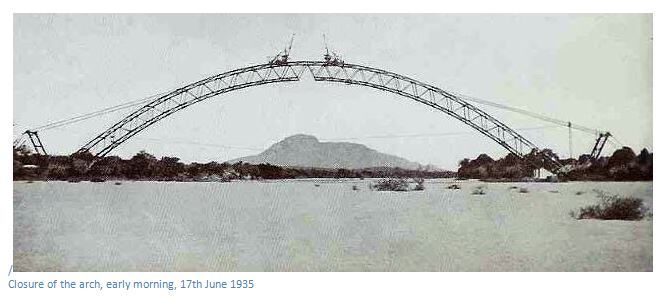
Weather & Rainfall Patterns
Station: 198s325e · 17.5 km away · 980m