Attraction in Egypt
Pyramid of Pepi I
About Pyramid of Pepi I
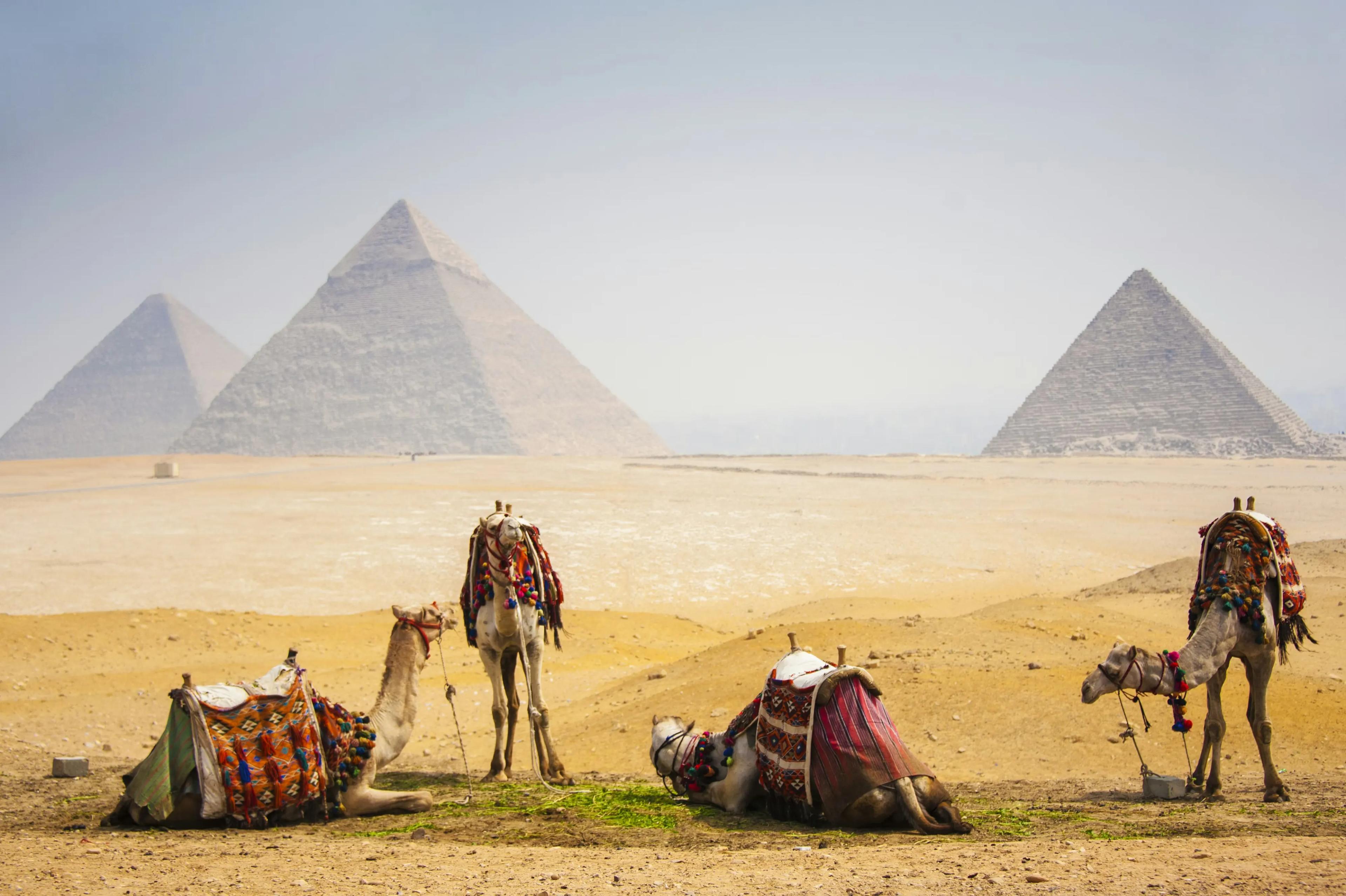
The Pyramid of Pepi I is a significant ancient Egyptian funerary monument located in South Saqqara, approximately 2.4 kilometers north of Djedkare Isesi's pyramid. Constructed for Pharaoh Pepi I of the Sixth Dynasty during the 24th or 23rd century BC, the complex was originally known as "Pepi's splendour is enduring" (Mn-nfr Ppy), a name that later contributed to the naming of the ancient capital city of Memphis.
Originally, the main pyramid measured about 78.75 meters at its base and rose to a height of 52.5 meters with a slope of approximately 53 degrees. Today, it stands as a severely damaged mound of rubble, reduced to about 12 meters in height, largely due to stone robbing over millennia. The complex included a mortuary temple, a cult (or satellite) pyramid, and an unexcavated causeway leading to a valley temple. The mortuary temple, though extensively damaged, followed a standardized layout, featuring an entrance hall, an open columned courtyard, and an inner temple with statue niches.
A crucial aspect of the Pyramid of Pepi I is its extensive collection of Pyramid Texts, which are ancient religious inscriptions covering the walls of its substructure. These hieroglyphic texts represent the largest corpus from the Old Kingdom, comprising 2,263 columns and lines. Although the tradition of Pyramid Texts originated in the Pyramid of Unas, they were first discovered in Pepi I's pyramid in 1880 by Gaston Maspero. The texts were intended to guide and protect the pharaoh's soul in the afterlife, facilitating his transformation into an "akh" (resurrected being) and ensuring eternal life among the gods.
Beyond the main pyramid, the complex is notable for the discovery of nine queens' pyramids located to its southwest. These include the pyramids of Nebuunet, Inenek-Inti, Meritites IV, Ankhesenpepi II, Ankhesenpepi III, Mehaa (along with her son Hornetjerikhet's tomb), Behenu, Reherishefnakht, and one anonymous pyramid. Some of these queens' pyramids also contain Pyramid Texts and, in the case of Reherishefnakht's pyramid, Coffin Texts, making it significant as the oldest known pyramid not built for a royal family member and providing a link between the Old and Middle Kingdoms.