Attraction in Egypt
Pyramid of Djedkare Isesi
About Pyramid of Djedkare Isesi
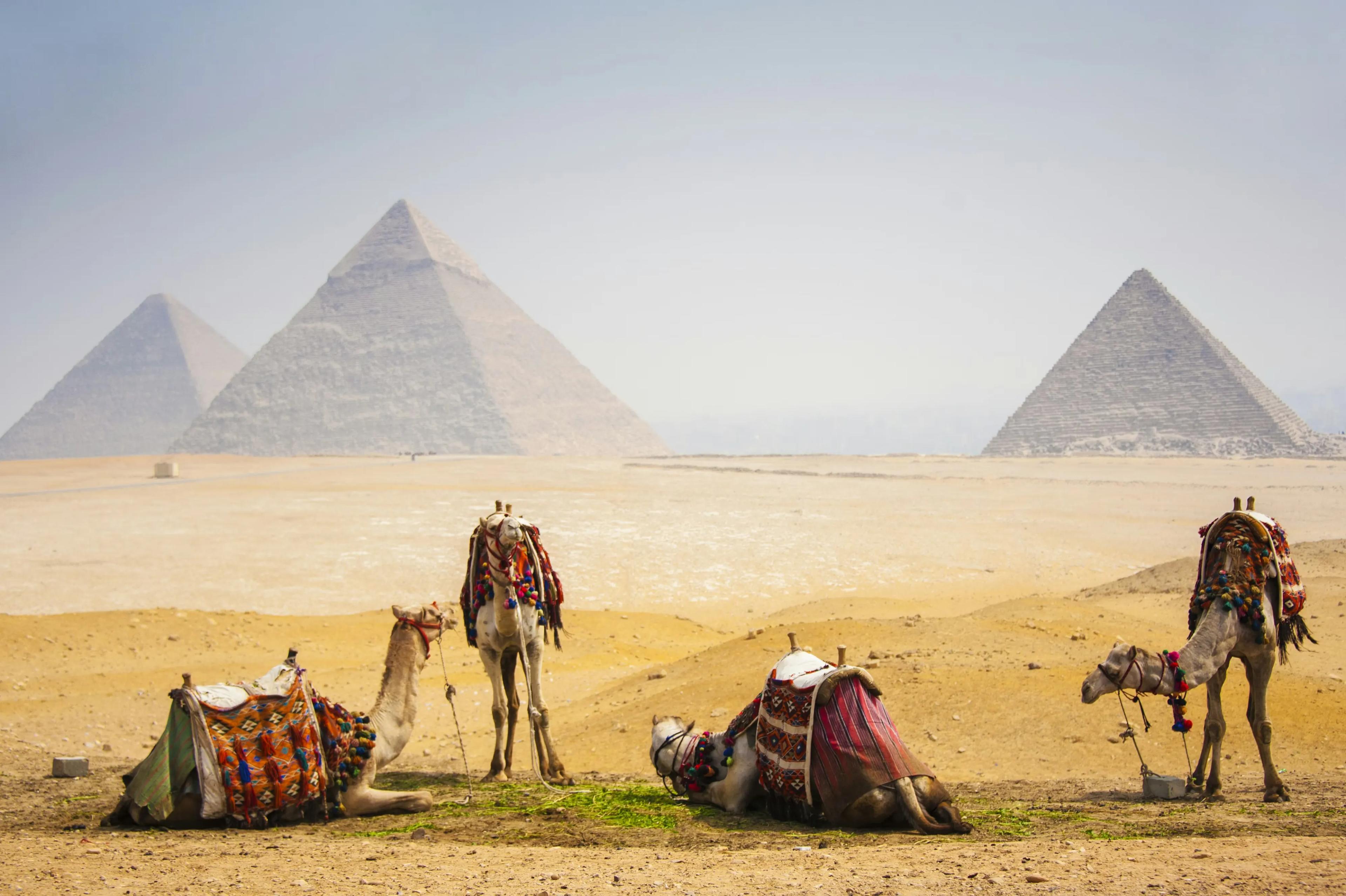
The Pyramid of Djedkare Isesi is an ancient Egyptian funerary complex located in South Saqqara, Egypt, approximately three kilometers south of the Step Pyramid of Djoser. Constructed for Pharaoh Djedkare Isesi, the seventh ruler of the Fifth Dynasty, in the late 25th to mid-24th century BC, it marked a significant shift in royal burial practices as the first pyramid built in this area of Saqqara. The pyramid was originally known as "Beautiful is Djedkare" and is locally referred to as Haram el-Shawaf, meaning "The Sentinel Pyramid."
Originally standing at 52.5 meters (172 feet) with a base of 78.75 meters (258 feet) and a slope of 52 degrees, the pyramid's core was built in six steps from rough limestone blocks, then encased in fine white Tura limestone. Over millennia, much of the casing has been plundered, and the upper three steps of the core are lost, reducing its current height to about 24 meters (79 feet). The complex includes the main pyramid, a mortuary temple on its east face, a valley temple now buried beneath modern Saqqara, a partially excavated causeway, and a cult pyramid at the southeast corner. The mortuary temple featured two large pylon structures, an alabaster-paved courtyard with sixteen pink granite palm columns inscribed with Djedkare's name, and an inner sanctum with a five-niche chapel, antechamber, and offering hall.
The pyramid's substructure is accessed from the north, beneath the courtyard pavement, leading through a descending corridor to a vestibule, antechamber, a serdab (storage room), and the burial chamber. This chamber once housed a basalt sarcophagus and alabaster canopic jars. A mummified body, believed to be that of Djedkare, was discovered within. Notably, a satellite pyramid complex for Queen Setibhor, Djedkare's consort, is situated at the northeast corner of the main complex. This queen's complex is the largest of its kind from the Old Kingdom, incorporating architectural elements previously reserved exclusively for kings. Djedkare's reign is also significant for his abandonment of the tradition of building sun temples, reflecting a changing religious focus from the cult of Ra to that of Osiris.