
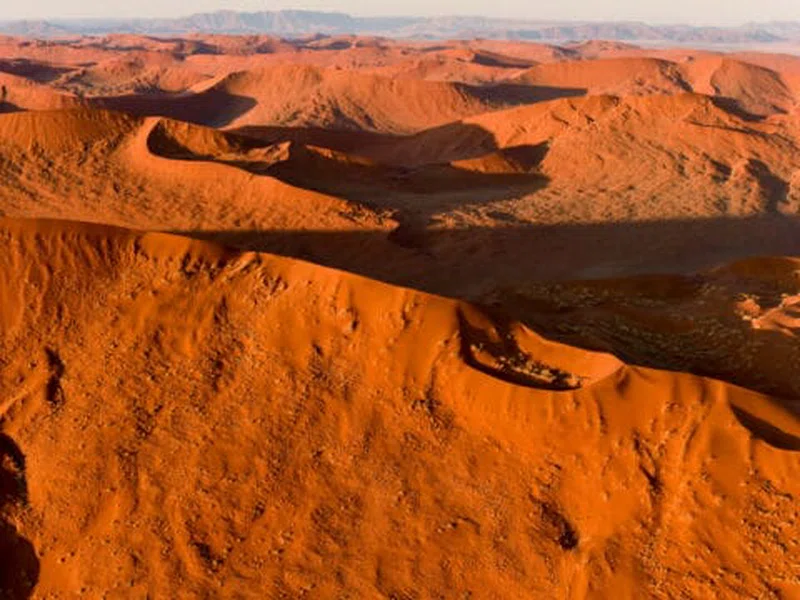
Namib Desert
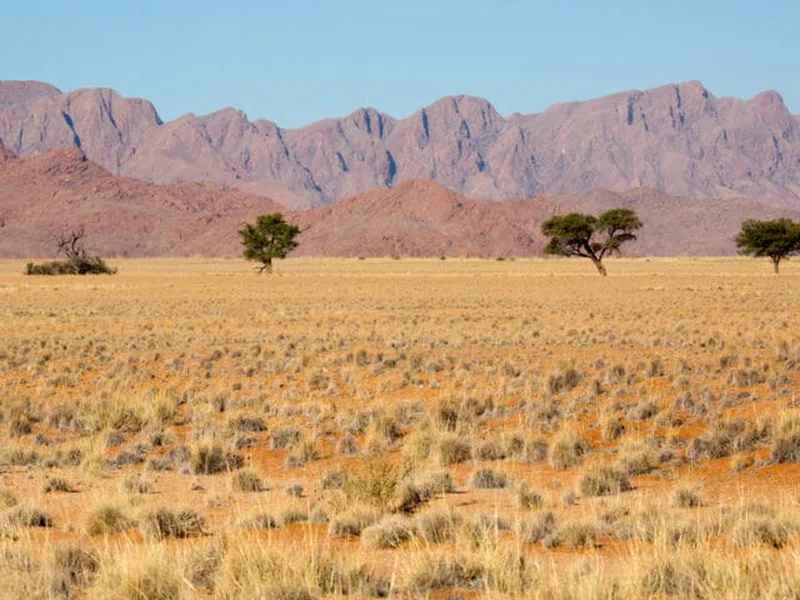
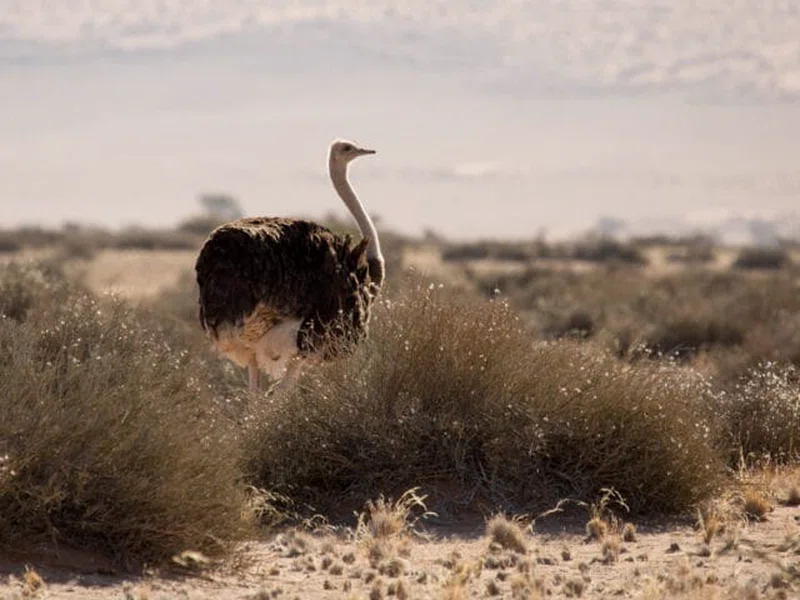
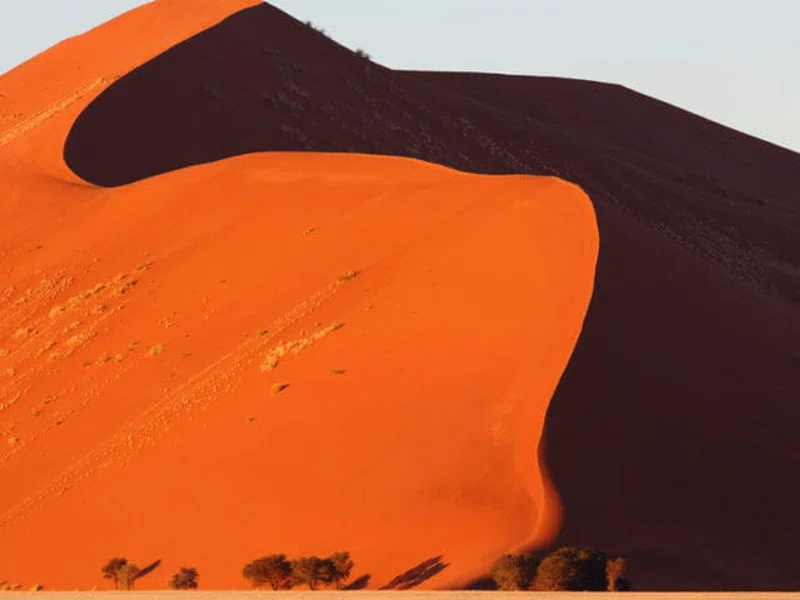
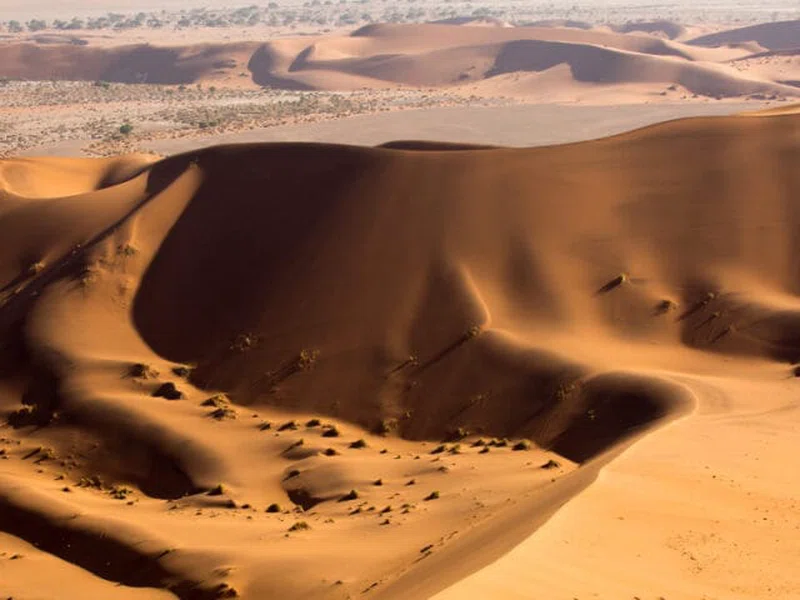
The Namib Desert is a vast, ancient coastal desert stretching over 1,900 kilometers (1,200 miles) along the Atlantic coast of southwestern Africa, encompassing parts of Angola, Namibia, and South Africa. Its name, derived from the Nama language, means "an area where there is nothing," reflecting its largely uninhabited and arid nature. Extending inland 130 to 160 kilometers (80 to 100 miles) to the Great Escarpment, the Namib is considered one of the oldest deserts in the world, having endured arid or semi-arid conditions for an estimated 55 to 80 million years. The desert's geology features extensive sand seas near the coast, with gravel plains and scattered mountain outcrops further inland. The southern Namib is particularly known for its towering red-orange sand dunes, some reaching over 300 meters (1,000 feet) in height and spanning up to 32 kilometers (20 miles) in length, making them among the largest globally. Notable features include the iconic Sossusvlei, a salt and clay pan surrounded by these massive dunes, and Deadvlei, characterized by its stark white clay pan and fossilized camel thorn trees. The Namib Sand Sea, a significant portion of the desert, is recognized as a UNESCO World Heritage site.The climate of the Namib is defined by its extreme aridity, with annual precipitation ranging from a mere 13 millimeters (0.5 inches) at the coast to about 51 millimeters (2 inches) inland. This dryness is largely due to the cold Benguela Current flowing northward along the coast, which cools the air above it and creates frequent, dense fogs. These fogs, occurring over 180 days a year in some coastal areas, are a crucial moisture source for the desert's unique flora and fauna. While coastal temperatures remain relatively stable between 9–20 °C (48–68 °F), inland areas experience significant temperature variations, with summer days exceeding 45 °C (113 °F) and nights often dropping below freezing.Despite its harsh environment, the Namib Desert supports a surprising diversity of life, many species being endemic and highly adapted to the arid conditions. Wildlife includes desert-adapted arthropods and small animals, such as the famous fog beetles that collect water droplets from the morning mists. Larger mammals like mountain zebras, gemsbok (oryx), springbok, ostriches, and even desert elephants, rhinos, lions, and hyenas can be found, particularly in the northern and eastern parts of the desert. The coastal waters are rich in marine life, supporting large colonies of brown fur seals and various shorebirds, including flamingos, pelicans, and penguins. The plant life is equally remarkable, with lichens and succulents thriving in coastal fogs, and the ancient Welwitschia mirabilis, a plant that can live for over a thousand years, relying on fog for survival.Human presence in the Namib is sparse, with indigenous pastoral groups like the Himba and Nama maintaining traditional lifestyles in certain areas. The desert holds economic significance due to its rich mineral deposits, particularly diamonds, which are extensively mined in the Sperrgebiet ("Prohibited Area") near the Orange River mouth. Tungsten, salt, copper, and uranium are also found. Much of the central and northern Namib is dedicated to conservation, notably within the Namib-Naukluft National Park, Africa's largest game reserve, and the Skeleton Coast National Park. These protected areas, along with coastal towns like Swakopmund and Walvis Bay, also serve as centers for tourism, offering opportunities for adventure activities and experiencing the desert's unique landscapes.
Quick Info
Own this place?
Claim it to manage photos, respond to visitors, and promote it to travelers.
Claim this listing →




Weather & Rainfall Patterns
Station: 245s153e · 33.8 km away · 649m