
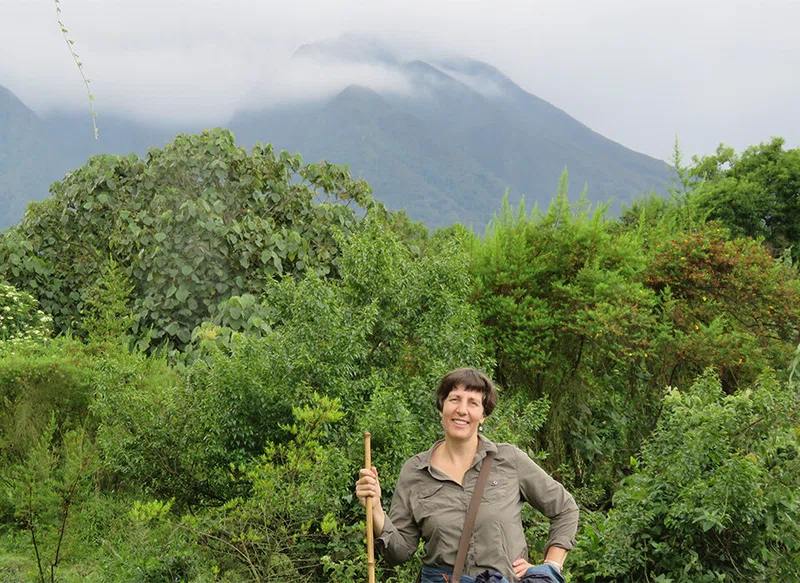
Mount Muhavura
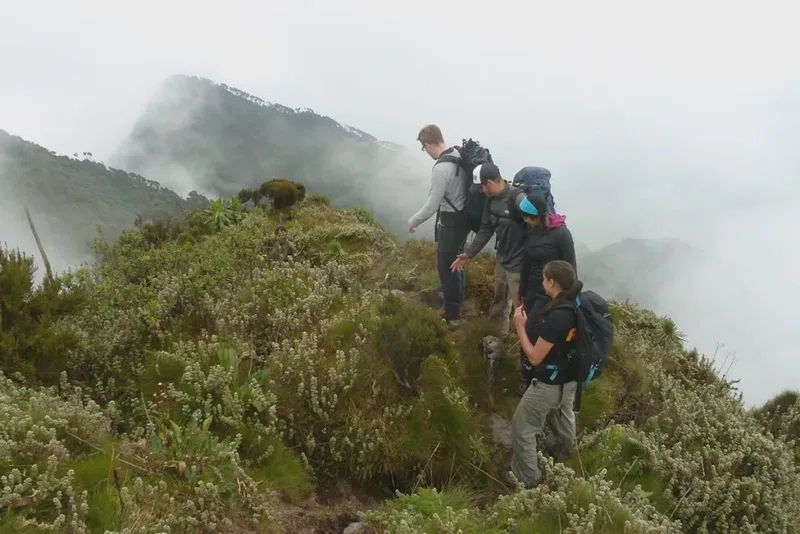
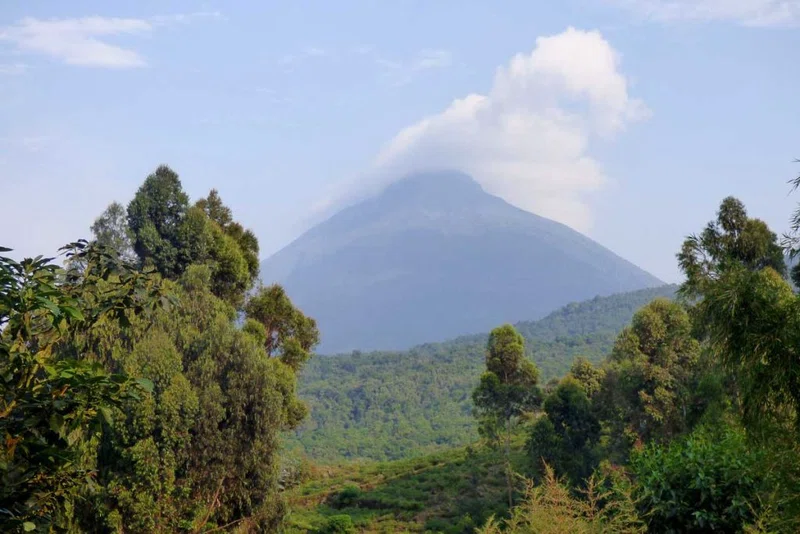
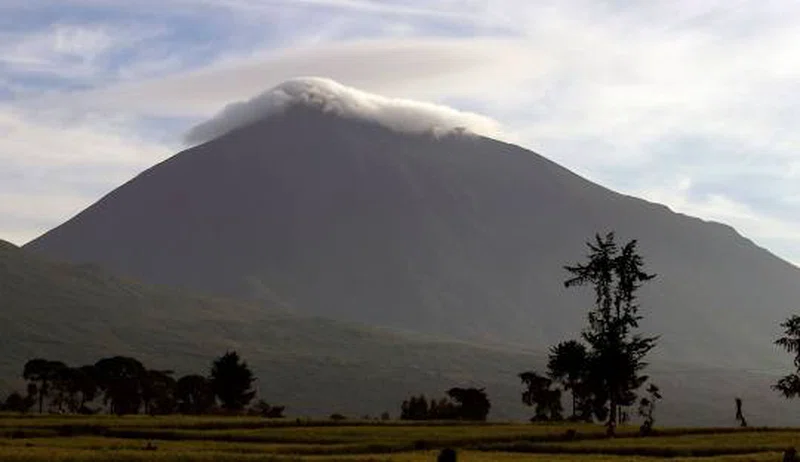
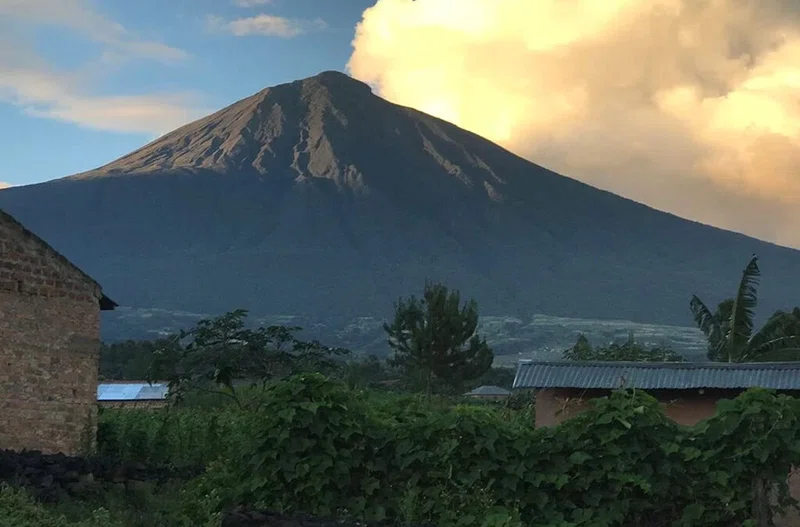
Mount Muhavura, also known as Muhabura, is a prominent extinct stratovolcano situated on the border between Rwanda and Uganda, forming a significant part of the Virunga Mountains. Rising to an elevation of 4,127 meters (13,540 feet) above sea level, it stands as the third-highest peak within the eight major mountains of the Virunga range. The mountain's name, "Muhabura," translates to "The Guide" in Kinyarwanda, a testament to its historical role as a navigational landmark visible across both countries. Geographically, it is part of the Albertine Rift, the western branch of the East African Rift, and its slopes are shared by Uganda's Mgahinga Gorilla National Park and Rwanda's Volcanoes National Park.Characterized by a classic conical shape with steep, basaltic flanks, Mount Muhavura's summit features a small, 40-meter-wide crater lake, which can be seen during dry periods. The mountain's slopes exhibit marvelous alpine vegetation, including giant lobelias that can reach three meters in height and moisture-trapping Senecio plants. Lower elevations are dominated by bamboo species like Arundinaria alpina, providing crucial habitat for various wildlife. The Muhavura trail offers a challenging yet rewarding 12-kilometer round trip hike, typically lasting 7 to 9 hours, with an elevation gain of 1,400 to 1,600 meters. Hikers are rewarded with panoramic views of Lakes George and Edward, parts of the Rwenzori range, and the broader Virunga profile.Mount Muhavura is a vital area for biodiversity and ecotourism. Its montane forests are home to a diverse array of fauna, including golden monkeys, with populations estimated at 3,000 across the Virunga range. Birdwatchers can spot species like the Rwenzori turaco, and duikers graze in clearings, while elephants are occasionally tracked on the Ugandan side. The mountain serves as an important corridor for animal movement within the Virunga Mountains, supporting 120 bird species and various reptiles. Conservation efforts are robust, with park fees funding anti-poaching patrols and community programs receiving a percentage of revenues. Guides enforce "Leave No Trace" principles, and reforestation initiatives have seen significant increases in native tree planting. The minimum age for hiking is 15 years, and groups are limited to 12 participants to ensure sustainable tourism.
Quick Info
Own this place?
Claim it to manage photos, respond to visitors, and promote it to travelers.
Claim this listing →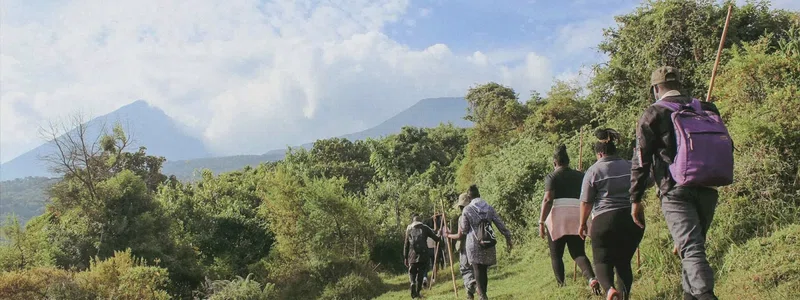

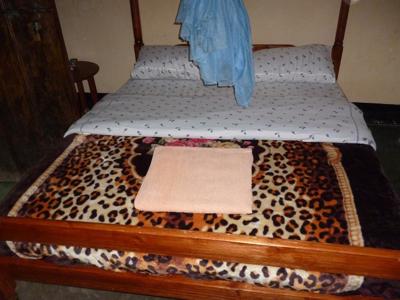





1-Day Mount Muhabura Volcano Hike Mgahinga National Park
0.0 km away
1-Day Mount Sabyinyo Hike Mgahinga Gorilla National Park
0.0 km away

4 Days Gorilla Habituation Experience Bwindi & Batwa Tour
0.0 km away

7 Days Uganda Gorilla Chimpanzee Wildlife Safari
0.0 km away
2 Days Mgahinga Gorilla Safari
0.0 km away

6 Days Mgahinga Hiking Safari
0.0 km away
Weather & Rainfall Patterns
Station: 14s294e · 23.6 km away · 1821m